Your Detergent Doesn't Need a Subscription
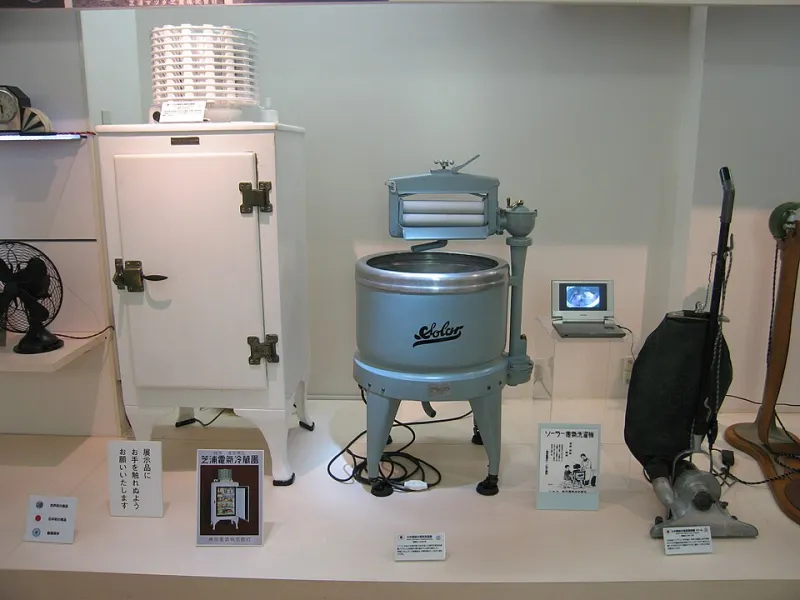
Photo: Dddeco, CC BY 2.5, via Wikimedia Commons
Somewhere in the last decade, doing laundry became a lifestyle. Open any app and you'll find wool-specific detergent in a matte bottle, mesh wash bags graded by fabric weight, pH-balanced sprays that promise to "refresh between wears," and a subscription box that delivers all of it monthly like you're a boutique hotel. The message underneath the marketing is always the same: your clothes are too precious, too technical, too complicated for you to handle alone.
I'm here to tell you the opposite. Doing your own laundry — imperfectly, occasionally shrinking something, sometimes drying a sweater into a toddler size — is one of the last unmonetized stages of owning clothes. Guard it.
Care Is the Relationship
Here's the thing nobody selling you a $28 laundry tonic will say: the care is the point. A garment you've washed fifty times isn't just clean. It's fifty data points of your life. You know how it behaves wet. You know which sock it eats. You've learned its moods the way you learn a person's.
Outsourcing that — to dry cleaning, to subscription services, to a "care subscription" that ships scented sachets to your door — doesn't just cost money. It severs the relationship. A shirt you never touch is a shirt you never commit to, and a shirt you never commit to is a shirt you'll replace in eighteen months. The garment-care-industrial complex doesn't want your clothes to last. It wants your clothes to last exactly long enough that you blame yourself, not the fabric, when they die — and buy the premium detergent next time.
The Basics, Honestly
You need almost nothing. Cold water. A plain detergent, whatever's on sale. Turn graphic stuff inside out. Air-dry anything with stretch in it. That's it. That's the whole secret the specialty industry is built on top of.
Will you ruin something occasionally? Yes. Everyone's grandmother ruined something occasionally. Shrinking a shirt teaches you more about fabric than any influencer's care-guide carousel ever will. The mistake becomes knowledge. The knowledge becomes a wardrobe you actually understand — which, not coincidentally, is the foundation of keeping clothes for decades instead of seasons.
And here's the political part, because there's always a political part: competence is a chokepoint. Every skill you outsource is a subscription you now depend on. Mending, laundering, altering, hemming — these were ordinary working-class competencies for most of American history, and they've been repositioned as boutique services or, worse, as aesthetic content. Reclaiming the boring version — the actual Tuesday-night load of laundry — is a small act of independence. You don't need an app to be clean.
Boring Is Bulletproof
The counterargument writes itself: "specialty detergents help delicates last longer." Sure, sometimes. If you own a cashmere coat, fine, act accordingly. But most of us are being sold precision tools for cotton t-shirts. The wash bag for your gym socks is not self-care. It's a wedge — a small purchase that reframes laundry as a problem requiring products instead of a relationship requiring attention.
So lean into the boring routine. Same day, same machine, same cheap detergent. Learn what your clothes do when they're wet. Shrink something once and never again. Fold the stuff that wrinkles if you care to; don't if you don't.
Because at the end of the day, a wardrobe is a set of relationships, and relationships are maintained in unglamorous moments. The drop is the highlight reel. The laundry is the marriage. Do it yourself, do it badly sometimes, and keep the whole thing off the market.