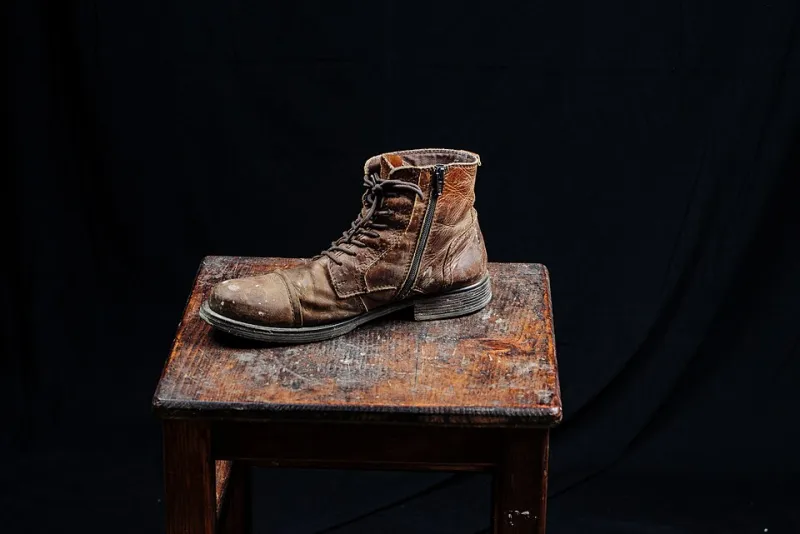
Three Dollars a Box: The Historians Digging Through America's Garage Sales
Photo: pilllpat (agence eureka), CC BY 2.0, via Wikimedia Commons
The sign on the folding table says EVERYTHING $3 A BOX, and nobody here thinks that's remarkable. It's a Saturday morning in a church basement outside Dayton, and the clothes in this box were worn by a machinist who died in February. His work shirts — Carhartt, before Carhartt was a lifestyle brand — still have the pencil marks on the cuff. His wife's cardigans are folded the way department stores folded things in 1987. A woman in a Green Bay sweatshirt picks through the pile, pulls out a satin bowling jacket with a rooster embroidered on the back, and says, out loud, to no one: "They don't make 'em like this anymore."
She's right, and she's also saying more than she knows. Because that box isn't just merchandise. To a small but growing group of resellers, collectors, and clothing historians, tables like this one are the last unfiltered archive of how ordinary Americans actually dressed — not the ads, not the catalogs, not the runway. The clothes themselves.
The Archive Nobody Curated
Museums collect what rich people wore. That's just how it's always been. The Met has ball gowns; it does not have a steelworker's Saturday-night shirt. What survives of working-class style survives by accident — in attics, in boxes marked "craft linens," on folding tables under fluorescent lights in basements from Ohio to Oregon.
That's where the diggers come in. A new generation of vintage resellers has started approaching garage and estate sales less like shopping and more like fieldwork. They photograph labels. They note repair marks, patch jobs, the hem that was let out twice. They're reading garments the way an archivist reads letters — for the evidence of a life that didn't get written down.
A pair of 1970s Levi's with a hand-sewn crotch patch tells you about the person who couldn't afford a new pair and had a sewing machine and ten minutes. A union-printed jacket tells you about a local that doesn't exist anymore. None of this was meant for you. That's exactly what makes it valuable.
What a Box of Clothes Knows
Talk to these resellers long enough and a pattern emerges: the clothes that survive say the most when they were worn the hardest. Workwear lasts, so workwear dominates the record. And the details are unglamorous and specific — the paint drips on a chore coat, the wallet-shaped wear on a back pocket, the sleeves on a flannel that are one shade darker because they spent twenty years rolled up under a truck hood.
Compare that to what's in the fast-fashion cycle now. A $12 polyester blazer from a haul video is designed to survive maybe two seasons of wear before it pills into a rag. It carries no repair marks because nobody repairs it. It carries no context because it was never worn long enough to earn any. When the whole wardrobe is disposable, the archive flattens. Future historians digging through what we left behind will find millions of identical garments, barely worn, with nothing to say.
The uncomfortable version of the Dayton woman's line isn't "they don't make 'em like this anymore." It's "there won't be anything like this left to find."
The Ethics of the Dig
Not everyone in the game handles it with care. The rise of "curated vintage" has brought a wave of buyers who sweep a rummage sale clean, flip the good pieces at a 900% markup, and leave the rest for the dumpster. The people who ran the estate sale — usually grieving family — see a fraction of the value and none of the story.
The historians and honest resellers push back on that, hard. The best of them document what they find, share label databases freely, and treat a dead stranger's jacket with the respect you'd give anything someone lived in. Some photograph every piece before it sells so the record outlives the garment. One collector in Pennsylvania keeps a spreadsheet of the names embroidered inside the jackets he's found — Ray, Delores, a kid named Bobby — because "somebody might come looking someday."
That's the difference between collecting and archiving. Collecting is about you. Archiving is about them.
Wear It Forward
There's a practical takeaway here that goes beyond sentiment. Every garment you keep, repair, and actually wear out is a primary source for whoever comes after us — evidence that someone lived, worked, mended, and refused to throw things away. Every garment you buy new and discard untouched is static.
So go to the rummage sale. Buy the ugly jacket with the name in it. Wear it until it earns more marks. Because the archive is only ever as good as what people bother to keep — and right now, America's closets are trying to tell us something. We should probably listen before the last box gets sold for three dollars and the story ends.