Read Before You Speak: American Uniforms That Picked the Fight for You

Photo: PattayaPatrol, CC BY-SA 4.0, via Wikimedia Commons
Every bar in America has a silent language, and it's not spoken. It's worn. Long before anyone orders a drink, the room has already sorted itself — who's with who, who's a stranger, who's asking for it. This is a field guide to the specific American looks that have historically done that sorting, told through the people who wore them into rooms where clothes were read like ID.
The Biker Cut: A Jacket With a Constitution
The "cut" — a vest made by cutting the sleeves off a leather jacket — started as pure function. Riders in the postwar years needed arm movement and airflow, and leather kept the wind off the chest. But when clubs started sewing patches onto the back, the cut became a document. Top rocker: club name. Center: colors. Bottom rocker: territory. To anyone who knew the code, the vest announced affiliation, rank, and geography in about two seconds flat.
And rooms read it. Wearing a set of colors into another club's territory was — and remains — a statement that has started more than one parking lot conversation. The cut's DNA runs straight into modern style: every sleeveless denim vest at every rock bar in the country is a descendant. Today it reads as general rebellion rather than a specific allegiance, which is either progress or dilution depending on who you ask.
Docs and Laces: The Code on Your Feet
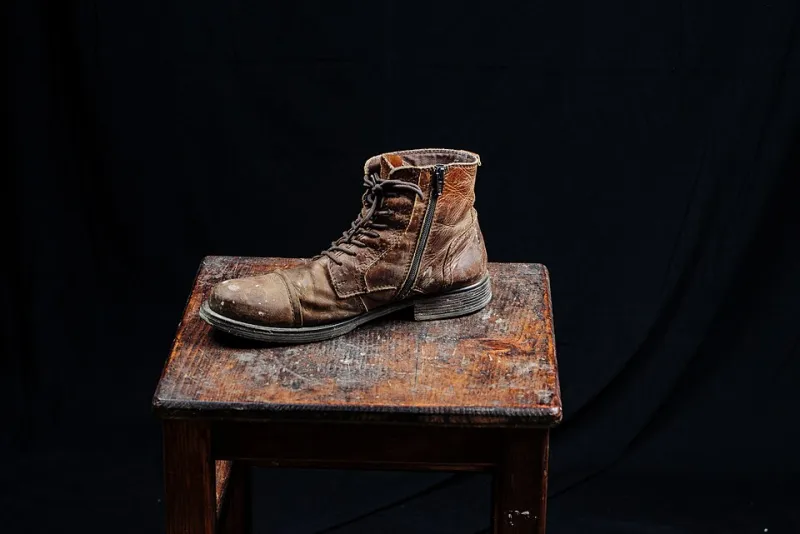
Doc Martens landed in American punk scenes in the early '80s via UK import, and the boot immediately became a shorthand — but the real information was in the laces. In skinhead and punk subcultures, lace color carried meaning: white for a kind of racial pride in one camp, red for another, and in response, anti-racist skins and punk crews adopted their own colors and ladder-lacing styles to signal the opposite. A boot with yellow laces meant something different than the same boot with black.
It was a dress code with no rulebook and total enforcement. The wrong color in the wrong room could get you a conversation you didn't want. Today, Docs are sold in every mall in America and the lace code survives mostly as trivia — but the underlying lesson stands: subcultures will always build new codes when mainstream ones get co-opted. The boot is just a boot. The signal moves somewhere else.
The Trucker Cap: Geography on Your Forehead
The foam-front trucker cap was free advertising — feed stores, seed companies, implement dealers handing out billboards you wore on your head. But somewhere along the way, the cap became a regional dialect. A John Deere green meant one thing in rural Wisconsin, another in a Brooklyn thrift store, and the difference was legible to everyone in the room.
The cap's power was always its specificity. It said: I'm from somewhere, and somewhere has a name. When country music and meme culture turned the trucker into a generic accessory, it lost some of that charge — but put on a cap for a local feed store in the county where it actually exists, and you'll still get nods from people who know.
The Battle Vest: A Resume Sewn in Patches
The metalhead's battle vest — a denim or leather vest covered in band patches, studs, and pins — is the most autobiographical garment in America. Every patch is a claim: I was there, I saw them, I've been down with this since the demo tape. It's a resume you wear on your back, and metal scenes have always policed it accordingly. A patch for a band you can't discuss intelligently? The room will find out.
The vest's meaning has shifted the least of any entry here. It still signals deep, specific, earned allegiance — which is why it's never really been merchandised. You can't buy a battle vest. You can only build one, patch by patch, year by year.
The Common Thread
What all of these looks share is that they were never about aesthetics alone. They were legibility systems — ways for strangers to place each other instantly in rooms where trust had to be established fast. Fashion media treats that as primitive. Honestly, it might be the most honest thing fashion ever does: admitting that what you wear is a position, whether you chose it consciously or not.
So the next time you get dressed, ask what the room will read before you say a word. Because it's reading something. It always has been.