Your Jacket Is Lying About You in the Best Way
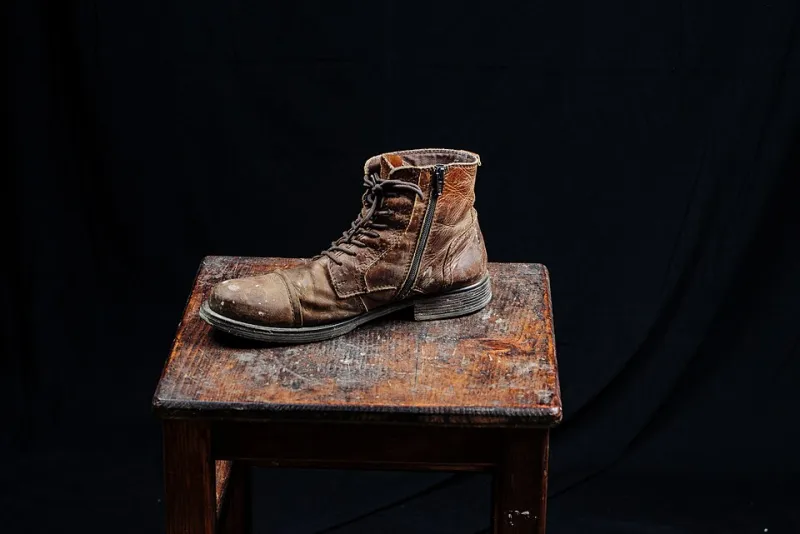
Photo: Shixart1985, CC BY 2.0, via Wikimedia Commons
Open the closet of someone you've lost and you already know what happens. Before you see anything, you smell it. The whole person comes back at once — the apartment, the era, the particular blend of coffee and soap and whatever they smoked. Clothing is the most honest autobiography any of us will ever write, and almost nobody reads their own.
We are trained to treat this as a problem. Fabric softener ads sell the fantasy of a garment that smells like nothing, like a cloud, like a meadow that has never existed. Launder everything, the logic goes. Reset constantly. Present a clean surface to the world, every single day.
We'd argue the opposite. The traces are the point.
The Archive You're Wearing
Think about what your favorite jacket actually knows. Every bar you've stood in — the smoke lives in the lining whether or not there was smoking, because the liquor soaks in anyway. The paint from the apartment you repainted in a single furious weekend. The sweat-ghost in the hat brim from the summer you worked outside and hated it and kind of miss it now. The pine sap from a trip you've told maybe four stories about.
Your memory compresses. It edits. It quietly deletes the boring years and inflates the good ones. Your clothes don't. They keep everything at full resolution, in the order it happened. That stain on the cuff is a timestamp. The wear pattern on the elbow is a habit you didn't know you had until the fabric confessed.
Anthropologists and conservators have understood this forever. Textiles from historical collections are read like documents — the sweat salts, the soot, the mended tears all testify to how a person actually lived, which is almost never how they said they lived. Museums pay money to preserve the grime. We pay money to destroy it.
The Reset Economy
Why does this matter now? Because the whole machinery of modern fashion runs on forgetting. Fast fashion needs you to feel like last month's self is embarrassing and discardable. The churn doesn't just move product — it trains you to see accumulated evidence of living as dirt. A garment with a history starts to read as a garment with a problem.
Washing everything, replacing everything, deodorizing everything — it's the same impulse as the feed refresh. Clear the slate. Become a new person, nightly, at low, low prices. But a person who resets constantly is a person with no sediment, and sediment is where character forms.
A Modest Proposal
Nobody's saying wear filth. There's a difference between a life well-worn and a hygiene situation, and we trust you to know where your line is. But consider the middle path: wash the shirt that needs it, keep the jacket that doesn't. Retire the hoodie from circulation instead of the washing machine. Let one or two pieces in your rotation function as what they already are — a logbook.
And when a garment finally falls apart, don't just toss it. Keep the collar. Keep the cuff. A shoebox of fabric fragments is a more accurate memoir than anything you'd write, and it takes up less room.
The consumer economy wants you odorless, spotless, and new. Every scuff you keep is a small refusal. You lived that. It happened to you. The evidence is on the left sleeve, and it's staying there.