The Anti-Haul Has a Sponsor

Photo: National Park Service (NPS), Public domain, via Wikimedia Commons
There's a shot that opens most anti-haul videos and you've seen it a hundred times. A hand lifts a sweater toward the lens — manicured, a ring catching the light — and then sets it back down on the shelf. The creator sighs. “I want it,” she says. “But I'm not going to buy it.” Then she explains why for twenty-two minutes. The video ends. The algorithm serves you three more just like it.
I'm not here to dunk on her. She's funny, she's careful, and she's genuinely trying to buy less in a country that has built an entire economy around making that impossible. But there's something happening in the anti-haul genre that the genre itself can't see, and it's worth naming: the confession has become the product.
The Format Is the Product
Watch enough of these and the structure starts to feel like a liturgy. The item is introduced at full price. The creator performs temptation — the little groan, the “listen, I know myself.” Then comes the reasoned refusal: the fabric content, the dupes she already owns, the rent. Then the outro, usually some version of “let me know what you're not buying this week.”
Here's the thing about listing a thing you're not going to buy: you have still listed it. The anti-haul is a catalog with the checkout disabled. It requires you to want the object in the first place, and it requires the audience to want it too, or nobody watches. The desire isn't abolished. It's just been given better manners.
And the genre has grown sponsors. Not always the obvious villain brands — more often the “mindful” ones, the small-batch, the ones with a sustainability tab on their site. The no-buy challenge is presented by a company. The decluttering series has an affiliate link in the description. The creator who spent ten minutes explaining why she won't buy a $340 cardigan will, in the next upload, recommend a $180 alternative that is functionally the same cardigan with a different label sewn in.
Trading One Signal for Another
I keep coming back to this: anti-consumption has become a status system. Restraint is a flex. Knowing exactly which brands to refuse is a form of connoisseurship, and connoisseurship has always been a way of telling the room who you are.
The old signal was “I can afford this.” The new one is “I could afford this and I chose not to.” Both require you to be the kind of person for whom the choice exists. Neither is available to someone deciding between a winter coat and a heating bill.
That's the sleight of hand. A no-buy year is a completely different act depending on whether it's a challenge or a circumstance. When it's a challenge, it's content: the rules are invented, documented, gamified, and abandoned in February. When it's a circumstance, it's called being broke, and nobody films it. There's no thumbnail for the month you ate rice and didn't tell anyone.
The Part That Doesn't Make the Cut
The anti-haul has one blind spot, and it's the same one every time: it's obsessed with the moment of purchase and silent about everything after. The problem was never that you bought a coat. The problem is that the coat was designed to fall apart in fourteen months and then be thrown into a landfill in a country that will store it, chemically, forever.
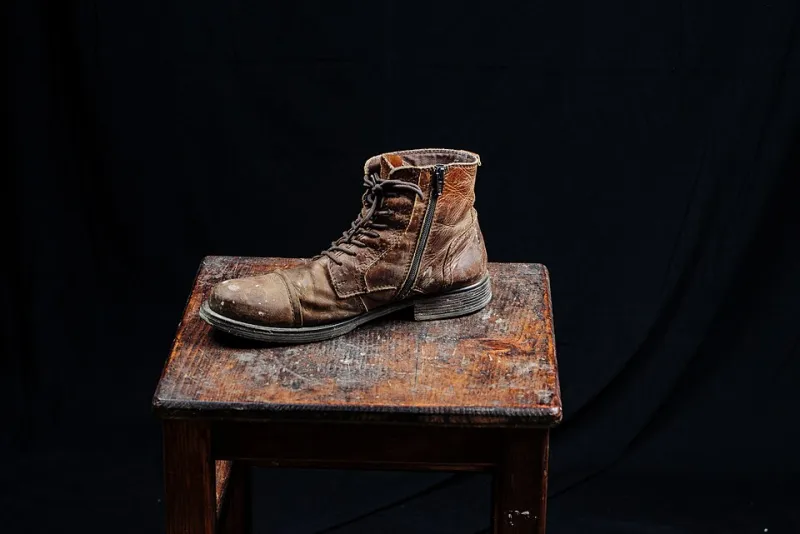
Refusing to buy something is easy. It costs nothing, which is precisely why it makes such good video. Keeping something for nine years is harder, uglier, and impossible to monetize. Mending a seam in your kitchen at eleven at night doesn't get a brand deal. Wearing the same boots until the sole is a rumor doesn't produce a thumbnail anyone clicks.
Which is why the most honest anti-consumption content tends to be the most boring content, and the algorithm knows it. Restraint is a slow, undramatic, unphotogenic practice. There's no before-and-after. There's just the same jacket, again, in April.
What Refusal Looks Like With the Camera Off
None of this means the videos are a scam. It means they're a genre, and genres have conventions, and conventions have sponsors. Fine. The trouble is when we start mistaking the genre for the movement — when refusing to buy in public starts to feel like the same thing as refusing to buy.
Real refusal isn't a list. It's a habit, and it's mostly invisible, and it's often boring. It's the secondhand rack you always check before the new one. It's the zipper you learn to replace. It's the group chat where somebody says “does anyone need a coat, size medium” and somebody does. It's a closet you've actually looked inside of recently, which is a stranger and more radical act than any haul video will ever be.
The anti-haul is a confession. That's not nothing — confessions are where change starts. But a confession isn't a cure, and the version with a thumbnail and a sponsor is the least useful part of the whole thing. The cure happens later, off camera, in a closet, on a Tuesday, when you don't tell a single person about it.
None of us are going to out-perform a system designed by people who are better at this than we are. But we can stop auditioning for it.