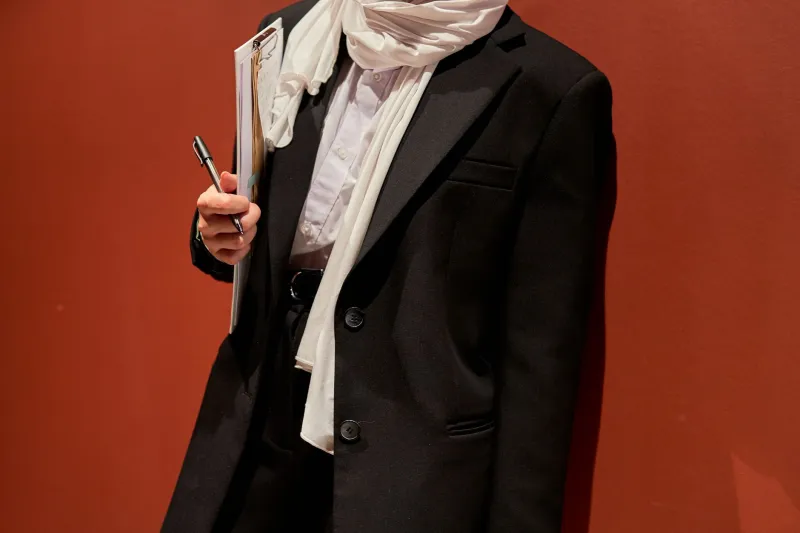
One Outfit, Zero Apologies: The Quiet Riot of Wearing the Same Thing Every Day
Somewhere between the third Instagram ad for a capsule collection you didn't ask for and the fourth email about a flash sale ending in twelve minutes, something in a certain kind of person just... snaps. Not dramatically. Not with a manifesto or a bonfire of fast fashion hauls. Just quietly, stubbornly, irrevocably. They pick an outfit. And then they wear it again. And again. And again.
This is the personal uniform. And depending on who's doing it and why, it's either the most boring thing you can do with a closet or one of the most pointed refusals available to a person living inside consumer capitalism.
Who's Actually Doing This (And Why It Matters)
Let's get the obvious part out of the way: yes, tech billionaires made this famous. Steve Jobs and his black turtleneck. Mark Zuckerberg and his grey t-shirts. Barack Obama, who once told Vanity Fair he only wore blue or grey suits to reduce decision fatigue. The narrative these guys sold was efficiency — fewer choices up top means more cognitive bandwidth for the important stuff.
And that framing, frankly, is worth interrogating. Because when a billionaire talks about eliminating wardrobe decisions, they're doing something very different from when a broke artist in Detroit or a queer kid in rural Tennessee does it. For the ultra-wealthy, the uniform is a productivity hack. For everyone else, it can be something rawer and more honest: a rejection of the idea that your value is tied to your novelty.
Jordan, a 29-year-old graphic designer in Chicago, started wearing the same rotation of three black crewnecks and two pairs of dark jeans about two years ago. "It started as a budget thing," they said. "I was tired of spending money I didn't have on clothes I'd wear twice. But then it became something else. People would notice. They'd make comments. And I realized how much social pressure there is to just keep consuming. Opting out of that felt like finally breathing."
That social pressure is the thing worth pulling apart here. Fast fashion's entire business model depends on the idea that what you wore last season is somehow inadequate. Trend cycles that used to run annually now churn weekly on TikTok. The implicit message is relentless: you are not enough as you are, and the fix is always, conveniently, purchasable.
Boredom as a Political Position
There's a long tradition in anti-consumerist thought of treating refusal as resistance. You see it in the Situationist détournement of the 1960s, in punk's deliberate ugliness, in the DIY ethos that's always run underneath mainstream fashion like a live wire. The personal uniform fits squarely in that lineage, even if it looks a lot quieter on the surface.
Because here's the thing about wearing the same thing every day: it makes other people uncomfortable in a way that's hard to articulate. It doesn't perform rebellion. It doesn't signal anything legible. It just... refuses to play. And refusal, when it's consistent and unapologetic, has a way of exposing the rules everyone else has been following without realizing it.
"People treat you like you're broken," says Marcus, a 34-year-old teacher in Atlanta who's worn variations of olive cargo pants and a plain white tee for the better part of three years. "They ask if you're okay. They assume you're depressed or that you don't care about yourself. What they're really doing is revealing how much their own sense of self-worth is wrapped up in variety. That's not my problem. That's theirs."
The psychology here is genuinely interesting. Research on decision fatigue is real — we do make worse choices as the day wears on and our mental resources deplete. But the deeper psychological move in the personal uniform isn't just about conserving energy. It's about detaching identity from appearance in a culture that has spent decades convincing us the two are inseparable.
The Personal Brand Industrial Complex
Social media has turbocharged the pressure to present a curated, ever-evolving visual self. Your Instagram grid is a mood board of who you are. Your TikTok outfits signal your tribe, your politics, your taste. The "outfit of the day" is a genre. Getting dressed has been gamified into content.
The personal uniform is a hard no to all of that. It refuses to perform. It declines to update. It has nothing to offer the algorithm.
Samira, a 26-year-old in Brooklyn who works in nonprofit fundraising, started her uniform practice after a period of what she describes as "spending money to feel like I had a personality." She now wears a rotation so tight she could pack for a week in a backpack. "I used to spend hours thinking about what to wear, what it said about me, whether it was interesting enough," she said. "Now I think about other things. I read more. I'm less anxious. I genuinely don't know if that's correlation or causation, but I'm not going back."
What Samira is describing isn't minimalism as lifestyle branding — the kind you see sold back to you in the form of expensive linen sets and artisanal hangers. It's something more adversarial. It's the choice to be visually unremarkable in a landscape that profits from your constant visibility and reinvention.
The Class Thing Nobody Wants to Talk About
Here's where it gets complicated, because it always does. The personal uniform, when practiced as deliberate resistance, carries a certain amount of privilege. You have to be in a position where your clothes aren't doing survival work — signaling professionalism in a job that requires it, navigating dress codes enforced by people with power over your life, or communicating safety in spaces where what you wear affects how you're treated.
For a lot of people in the US, what you wear is never just an aesthetic choice. It's a negotiation. The Black professional who knows their wardrobe is being read differently in the boardroom. The trans teenager who dresses to avoid confrontation on the bus. The immigrant worker whose clothes are part of how they're categorized and dismissed.
So the uniform as resistance works best when you're honest about who gets to resist easily and who's already fighting a different battle. The goal isn't purity. It's awareness.
What Wearing Nothing New Actually Costs the Machine
Here's the bottom line, stripped down like a good crewneck: fast fashion needs your churn. It needs you to feel like last month's purchases are already stale. It needs the anxiety, the scroll, the sale, the regret, the repeat. Every person who steps off that treadmill — genuinely, not just as a rebrand — is a small withdrawal from a system that runs on manufactured inadequacy.
The personal uniform isn't a solution to everything wrong with the fashion industry. It doesn't fix supply chains or labor exploitation or the mountains of textile waste clogging landfills from Atacama to the American South. But it's a practice. A daily, embodied, low-drama practice of saying: I am not a market. I am not a demographic. I am not a content opportunity.
You wear the same thing every day. People notice. People judge. And somewhere in that friction is a conversation worth having about why we all agreed to keep buying things we don't need to impress people we don't like.
Wear your resistance. Even if it's the same thing you wore yesterday.