Dress Coded: How 'Professional' Standards Are Just Control With a Collar
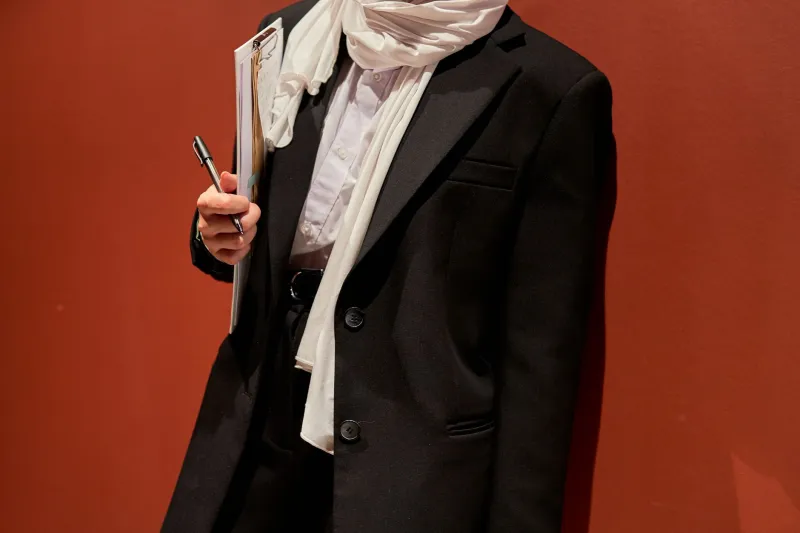
Let's be honest about what a dress code actually is. Strip away the HR language, the laminated policy sheets, the vague appeals to "client-facing environments" — and what you've got is a rulebook written by one kind of person, for one kind of person, enforced on everyone else.
Dress codes are older than corporations. They've been used by schools, courts, churches, and governments to signal who belongs and who doesn't, long before anyone invented the business casual memo. What's changed is the packaging. Today, the enforcement is softer, more deniable. Nobody says we don't want your kind here. They say we just need everyone to look polished. Same result. Cleaner paperwork.
The Myth of the Neutral Standard
Here's what the phrase "professional appearance" actually means: it means approximating the aesthetic of a mid-century white-collar worker. Straight hair. Subdued colors. Western silhouettes. Closed-toe shoes. The whole architecture of "looking professional" was built around a specific body, a specific background, and a specific cultural inheritance — and then held up as a universal, objective standard that anyone could meet if they just tried hard enough.
They couldn't. They can't. That was always the point.
Denise, a paralegal in Atlanta, spent three years fighting a policy that prohibited "excessive" hairstyles — a term that, in practice, only ever applied to Black employees. "They never wrote down 'no locs.' They didn't have to," she says. "The language was vague enough to give them cover, but specific enough that everyone knew what it meant." She started wearing her hair in increasingly elaborate styles after her second warning. "At some point I decided: if you're going to flag me anyway, I'm going to make it worth it."
Denise isn't alone. The CROWN Act — legislation banning race-based hair discrimination — has passed in over 20 states, which tells you two things simultaneously: that this discrimination is real and documented enough to require a law, and that in roughly half the country, it's still perfectly legal to penalize someone for their natural hair texture in a professional setting.
Heels, Hemlines, and the Gender Tax
The gendered dimension of dress codes is its own category of exhausting. Women in corporate environments have historically been handed a rulebook that manages to be both more restrictive and more vague than the one handed to men — required to appear feminine but not too feminine, polished but not distracting, authoritative but not threatening.
Maya, a former financial analyst in Chicago, left her firm in part over a policy that strongly "encouraged" women in client-facing roles to wear heels. "It wasn't written anywhere official. It was just one of those things that got communicated," she says. "My manager pulled me aside after a meeting and told me I'd 'look more put-together' in heels. I wear a size eleven. Do you know how hard it is to find professional heels in a size eleven? And why should I have to?"
She started showing up in increasingly deliberate flat shoes. Clean, expensive, immaculate — but flat. "I made sure they couldn't say I looked sloppy. I just refused the specific thing they wanted from me." She eventually left anyway. The heels were a symptom, not the disease.
This is the thing about dress code resistance — it rarely happens in isolation. People don't push back on clothing policies because they're passionate about footwear. They push back because the clothing policy is one visible edge of a much larger system that's been telling them, in a hundred small ways, that they don't quite fit.
Cultural Dress as Radical Act
For many workers, reclaiming cultural clothing isn't just personal expression — it's a deliberate refusal to disappear.
Raj, an engineer at a tech firm in the Bay Area, started wearing kurtas to work after five years of defaulting to jeans and hoodies. "I'd spent years trying to blend in. And one day I just thought — blend into what, exactly? This company has a ping pong table and a cold brew tap, it's not exactly a formal environment. The only reason I was dressing the way I was is because I'd absorbed this idea that Western casual was the default and everything else was a statement."
He wears them regularly now. Some colleagues have asked questions — curious ones, mostly. A few have been weird about it. His manager said nothing, which he takes as a win. "I'm not doing it to educate anyone. I'm doing it because it's mine and I'm allowed to have things that are mine."
This is what the resistance looks like in practice. Not always dramatic. Not always a confrontation. Sometimes it's just showing up in the thing you were always allowed to wear and daring anyone to say otherwise.
The Classroom Isn't Innocent Either
School dress codes deserve their own indictment. The logic deployed in corporate environments starts earlier — often much earlier — and the targets are, if anything, even more vulnerable.
Students across the country have been sent home, suspended, or publicly reprimanded for natural hair, head coverings, cultural garments, and clothing deemed too "distracting" — a word that has historically been applied to girls' bodies with a frequency that should make any reasonable person uncomfortable. The message absorbed isn't just about clothes. It's about whose existence is the default and whose is the disruption.
Some students are fighting back, and they're doing it with the kind of clarity that comes from not yet having learned to be diplomatic about injustice. In 2023, a Louisiana high school student filed suit after being repeatedly punished for her locs. She won. These wins matter — not because one lawsuit fixes a system, but because every time someone refuses to accept that the rule is neutral, the rule gets a little harder to defend.
Wearing Your Resistance
None of this means that choosing to comply is a moral failure. People navigate systems with the resources they have. Sometimes you wear the dress code because you need the job, the degree, the credential — and that's not selling out, that's survival.
But there's a difference between surviving a system and believing it's fair. And there's something powerful about the people who, when they get a little room to maneuver, use it — who wear the kurta, grow out the locs, ditch the heels, show up in the thing that belongs to them rather than the thing the institution handed them.
Dress codes will tell you that clothes are trivial. That it's just an appearance standard, just a baseline, just what's expected. Don't buy it. The fact that institutions police appearance so aggressively is proof of exactly how much it matters — proof that what you wear carries weight, carries meaning, carries the kind of identity that some people would very much prefer you left at the door.
Leave it on. Walk in anyway.