Opting Out or Buying In? The Strange Politics of Dressing Like Nobody
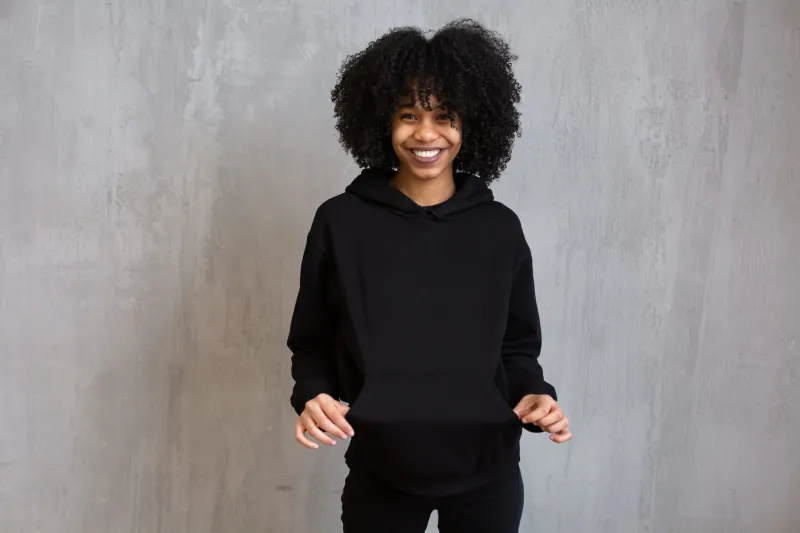
There's something quietly radical about the person who shows up to the party wearing the same gray crewneck they wore last Tuesday. No logo. No statement tee. No carefully curated vintage find. Just — clothes. Functional, forgettable, deliberately unremarkable clothes.
Call it the uniform. Call it anti-fashion. Call it whatever you want — but don't call it an accident. Because increasingly, the choice to dress like nobody is one of the most deliberate choices a person can make.
The Aesthetics of Erasure
Let's start with what this actually looks like in practice. We're talking neutral palettes — black, white, gray, navy, the occasional olive drab. Silhouettes that don't ask for attention. Fabric that functions. No seasonal updates, no trending colorways, no capsule drops you need to be online at noon to cop.
This is the wardrobe of someone who has, consciously or not, declared a kind of ceasefire with the fashion industry. And it cuts across some wildly different demographics. You've got the Silicon Valley tech bro in his Patagonia vest and dark jeans — the so-called "productivity uniform" designed to eliminate decision fatigue and signal that he's thinking about bigger things than clothes. You've got the minimalist aesthetic that's been quietly dominating certain corners of the internet since at least 2012, all linen and restraint. And then there are the internet subcultures — "normcore," "gorpcore" before it got a name — that weaponize blandness as a kind of camouflage, a way to move through the world without broadcasting anything.
What they all share is an intentional refusal. A "no thanks" to the relentless churn of trend cycles that demand you update your entire self every six months.
Rebellion or Aesthetic Privilege?
Here's where it gets complicated, though. Because opting out of fashion has always been easier for some people than others.
When a wealthy tech CEO wears the same black turtleneck every day, it reads as visionary. When a working-class person wears the same rotation of basics, it reads as struggling. The "uniform" as a conscious choice carries a certain kind of social capital — you have to already be legible enough, secure enough, powerful enough, for your deliberate blandness to register as a statement rather than a limitation.
There's also a racial dimension here that doesn't get talked about enough. For Black Americans, for Latinx communities, for immigrant families, clothing has historically been a tool of visibility, pride, and cultural assertion — a way to say we are here and we are beautiful in a country that has spent centuries trying to make those communities invisible. The luxury of dressing like nobody is, in many cases, a white and affluent luxury. The politics of erasure hit differently depending on who's doing the erasing.
So when we romanticize the anti-fashion wardrobe, we have to ask: who gets to opt out, and what are they opting out from?
The Market Loves a Dropout
And then there's the obvious problem: the fashion industry has already absorbed this rebellion and is selling it back to us at a markup.
Everlane built an entire brand around "radical transparency" and clean basics. Muji turned Japanese minimalism into a global retail empire. Even Patagonia — beloved by the environmentally conscious outdoorsy set — is still a company moving product, still participating in the system of manufacturing and consumption it ostensibly critiques. The "anti-consumption" aesthetic is one of the most commercially successful aesthetics of the last decade.
This is the trap, right? Every genuine act of cultural resistance eventually gets identified, packaged, and sold. Punk got swallowed. Grunge got swallowed. Normcore got a think-piece in the New York Times and then a dedicated section on ASOS. The moment a counter-aesthetic becomes legible as an aesthetic, someone is already figuring out how to monetize it.
So does that mean the whole thing is pointless? That there's no authentic way to opt out?
The Case for Wearing Nothing New (Literally)
Maybe the answer isn't about what you buy — it's about what you stop buying.
The most genuinely radical version of the anti-fashion wardrobe isn't the $200 Everlane tee. It's the thrifted Hanes three-pack. It's wearing your clothes until they fall apart and then patching them. It's refusing the seasonal update entirely, not because you've found a cleaner version of the same consumption, but because you've actually stepped off the treadmill.
There's a growing contingent of people — particularly younger Americans dealing with economic precarity and climate anxiety — who are arriving at this place not as a philosophical position but as a practical reality. They can't afford to keep up with trends. They don't want to. And in that refusal, something interesting is happening: clothing is becoming less about identity performance and more about, well, clothing.
That sounds almost too simple. But in a culture that has spent decades insisting your wardrobe is an extension of your personal brand, your values, your very soul — choosing to wear stuff that's just stuff is genuinely countercultural.
Does Anonymity Have a Politics?
Some internet subcultures have taken this further, using the uniform as a kind of deliberate anonymity — a refusal to be read, categorized, or marketed to. If you give the algorithm nothing to work with, the algorithm can't profile you. If your wardrobe doesn't signal tribe, it can't be used to sort you.
There's something appealing about that. In an era of hyper-targeted advertising and identity-as-product, the person who looks like nobody is, in a small way, ungovernable.
But anonymity is also just... quiet. And quiet doesn't always move the needle. Sometimes resistance needs to be loud, visible, unmistakable. Sometimes you need the statement tee. Sometimes you need to be seen.
Maybe the real answer is that none of these choices exist in a vacuum. The uniform is a tool, not a solution. Opting out of trend cycles matters, but only if it's paired with an actual critique of the systems those cycles serve — fast fashion's labor exploitation, the environmental cost of synthetic fabrics, the way the industry commodifies identity and sells it back to us in increasingly smaller increments.
Dress like nobody if you want. But know why you're doing it. And maybe, while you're at it, ask who else gets to make that choice — and who doesn't.
None Of Us exists for people who are done being a market segment. Wear what you mean.