All the Same, All Together: Why Dressing Like Your People Is the Most Radical Thing You Can Do

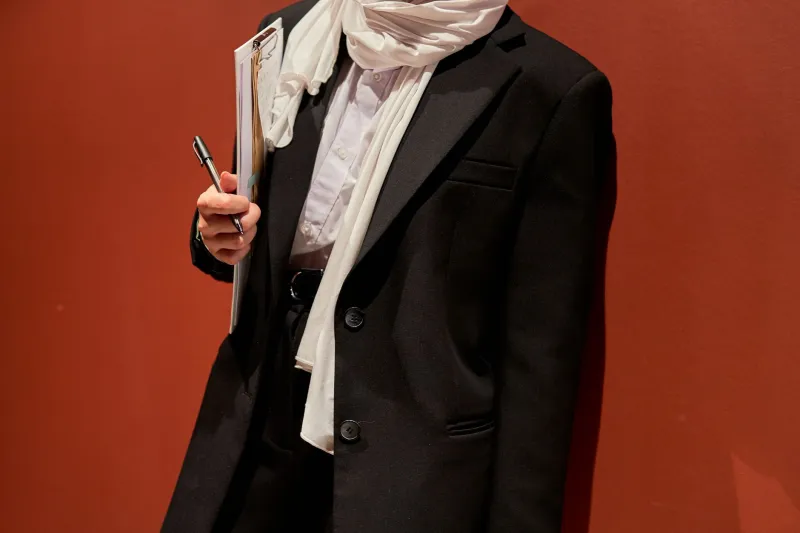
Photo by Photo by Stella Soomlais on Unsplash on Unsplash
The fashion industry has a very particular idea of what rebellion looks like. It's eclectic. It's maximalist. It's a thrift-store blazer over a band tee over a pair of vintage corduroys, assembled into something that screams I contain multitudes. The algorithm loves it. The brands love it more.
So what happens when people start doing the opposite?
Across the country — in warehouse lofts, community gardens, protest encampments, and corner coffee shops — a growing number of people are deliberately collapsing their wardrobe into something that looks almost like a uniform. All black, every day. Or the same heavy canvas work pants with the same crewneck, rotated through the week. Or a specific subculture silhouette so consistent it functions like a jersey. Not because they can't afford variety. Not because they lack imagination. But because sameness, chosen deliberately, turns out to be one of the sharpest tools available against a consumer culture that profits from your constant reinvention.
The Algorithm Wants You Confused
Here's the thing about trend cycles in 2024: they don't last seasons anymore. They last weeks. Sometimes days. TikTok's microtrend machine has compressed the fashion calendar into something almost biological — a living organism that mutates faster than you can keep up with, and that's entirely the point. If you're always chasing the next look, you're always buying. You're always slightly behind. You're always, in the most profitable sense of the word, wanting.
A deliberate uniform breaks that loop at the source.
"When I stopped trying to have a 'personal style' in the way Instagram defines it, I stopped feeling like I was failing at something," says Maren, a Chicago-based graphic designer who's worn variations of the same black jeans and dark crewneck combination for going on three years. "I'm not opting out of fashion. I'm opting out of the part of fashion that exists to make me feel inadequate."
This isn't asceticism for its own sake. It's a deliberate redirection of energy — away from the daily performance of novelty and toward something more durable. What you wear stops being a question you have to answer every morning and starts being a position you've already taken.
Subculture as Signal
The uniform-as-resistance isn't just a minimalist thing. It shows up just as powerfully in subcultures where the look is dense, specific, and immediately legible to insiders.
Think about the visual grammar of hardcore. Or the workwear-meets-anarchism aesthetic of certain leftist organizing communities. Or the way queer subcultures have always used consistent visual codes — particular cuts, particular colors, particular patches — not just as fashion but as communication. As safety. As solidarity.
In these contexts, dressing alike isn't conformity. It's affiliation. It says: I know what this means and so do you. It creates a visual commons, a shared language that exists outside of brand loyalty and outside of whatever the mainstream has decided is cool this week.
Jordan, who designs small-run apparel out of a studio in East Atlanta, puts it plainly: "There's a reason uniforms have always been political. Soldiers wear them. Nurses wear them. Prisoners wear them. People in power decide who gets to wear what, and why. When a community builds its own uniform from the ground up, they're taking that power back."
Jordan's pieces — simple, durable, deliberately unbranded — are designed to be worn repeatedly, to age visibly, to become more themselves over time. "I want someone to wear my stuff until it falls apart and then patch it. That's the whole point."
The Paradox of Chosen Sameness
There's a version of this conversation that goes sideways fast. Uniformity has a dark history — it's been used to erase individuality, to enforce hierarchy, to signal dangerous kinds of group loyalty. That's real, and it's worth sitting with.
But there's a meaningful distinction between a uniform imposed from above and one assembled from below. Between the sameness demanded by institutions and the sameness chosen by communities. The difference is consent. The difference is who's holding the power.
When None Of Us says wear your resistance, we're not talking about a dress code. We're talking about intentionality — about making choices that mean something beyond the next dopamine hit of a new purchase. Sometimes that looks like a single repeating outfit. Sometimes it looks like a subculture uniform that marks you as part of something larger than yourself.
Either way, it's a refusal. A refusal to let the market define what individuality looks like. A refusal to keep performing novelty for an audience that profits from your restlessness.
What You Lose, What You Gain
Adopting a uniform — even a loose one — means giving something up. The daily creative exercise of getting dressed. The social currency of being seen as someone with a look that shifts and evolves. The pleasure of surprise.
But people who've done it tend to describe what they gain in terms that sound almost spiritual. Clarity. Presence. A sense that their clothes are working for them rather than the other way around.
"I used to spend real mental energy on what I was wearing," says Delia, a community organizer in Philadelphia who's settled into a rotation of dark utility pants and plain long-sleeves. "Now that energy goes somewhere else. Somewhere that actually matters to me."
That's not nothing. In fact, in a culture designed to fragment your attention and monetize your insecurity, redirecting that energy might be one of the most genuinely radical things you can do.
Dress like your people. Wear the same thing until it wears out. Let your clothes mean something that doesn't require a new purchase to maintain.
The uniform isn't the end of self-expression. It's the beginning of something more honest.