Hiding in Plain Sight: How Dressing to Disappear Became the Loudest Thing You Can Do
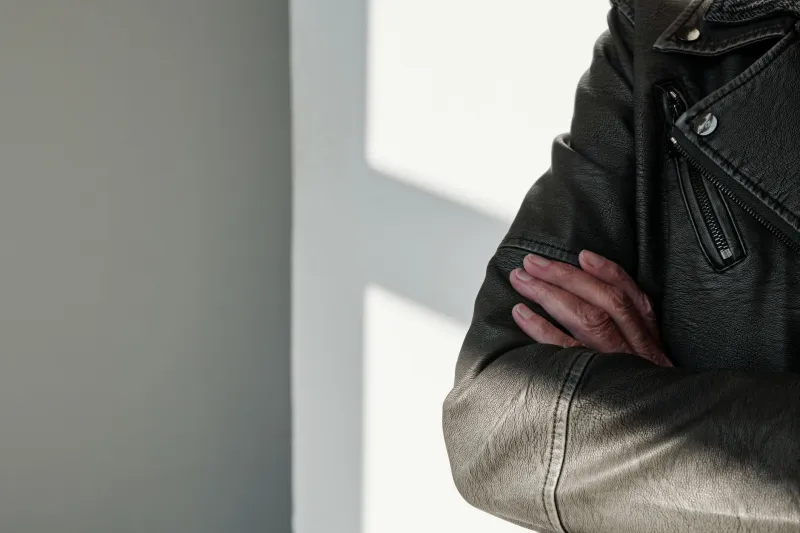
There's a woman in Chicago — she asked us to call her Mara — who wears the same rotation of grey, navy, and black every single day. No logos. No statement pieces. No color that pops on a ring light. She works in tech, which means she is surrounded, eight hours a day, by people whose personal brand is visible from across a WeWork. Mara is not one of them. That's the point.
"I got tired of being read," she says. "Every choice I made — what shoes, what bag, what graphic tee — felt like data I was giving away. One day I just decided to stop transmitting."
What Mara is describing has a name now, though the people doing it mostly resist naming it. Call it anonymous dressing, or intentional invisibility, or just the refusal to perform. Whatever you call it, it's spreading — quietly, by design — through cities, campuses, and the corners of the internet that have grown allergic to aesthetics.
The Attention Economy Has a Dress Code, and It's Exhausting
Here's what nobody says out loud but everyone in their mid-twenties already knows: the pressure to look like something is no longer just social. It's economic. Your appearance feeds systems. Facial recognition. Retail analytics. Behavioral advertising. The cameras in your city aren't just watching for crime — they're building profiles, mapping movement, cataloguing what you wear so that data can be sold, shared, and used to predict what you'll do next.
And that's before we even get to the voluntary surveillance. Every outfit posted to Instagram or TikTok is a data point. Every aesthetic you commit to — cottagecore, dark academia, streetwear — is a signal that algorithms use to slot you into a box and start serving you ads for the box's contents. You think you're expressing yourself. The platform thinks you're a revenue stream.
Anonymous dressing is, at its core, a refusal to cooperate with that system. It's not about being boring. It's about being unclassifiable.
Grey Is a Political Color
Jordan, a 29-year-old teacher in Atlanta, started dressing anonymously after spending a year deep in the personal style rabbit hole on YouTube. "I watched hundreds of videos about building a wardrobe that expressed who I was," he says. "And at some point I realized I was just rebuilding myself in the image of an algorithm's idea of me. I was being optimized."
He sold most of his wardrobe and replaced it with what he calls "a non-uniform uniform" — plain trousers, unbranded sweatshirts, solid-color basics in a tight palette of earth tones and neutrals. Nothing remarkable. Nothing that announces an affiliation.
"People notice it, ironically," he laughs. "They ask me why I dress so plain. And I say: because I don't want to be a billboard. Not for a brand, not for a subculture, not for a version of myself I performed for other people."
That self-awareness is key. This isn't minimalism as aesthetic — there's a whole Instagram industry built around that, which kind of defeats the purpose. This is minimalism as withdrawal. The goal isn't to look clean and aspirational. The goal is to look like nothing in particular, which in 2024 America is genuinely difficult to pull off.
The Surveillance Angle Nobody Wants to Talk About
Let's be direct about something. Facial recognition technology deployed by law enforcement, retailers, and private companies is less accurate on people of color, but it's surveilling everyone. And while dressing in plain clothes won't fool a camera pointed at your face, it does complicate the secondary data collection — the behavioral analytics, the style profiling, the systems that track what brands you're wearing and use that to build a consumer identity without your knowledge or consent.
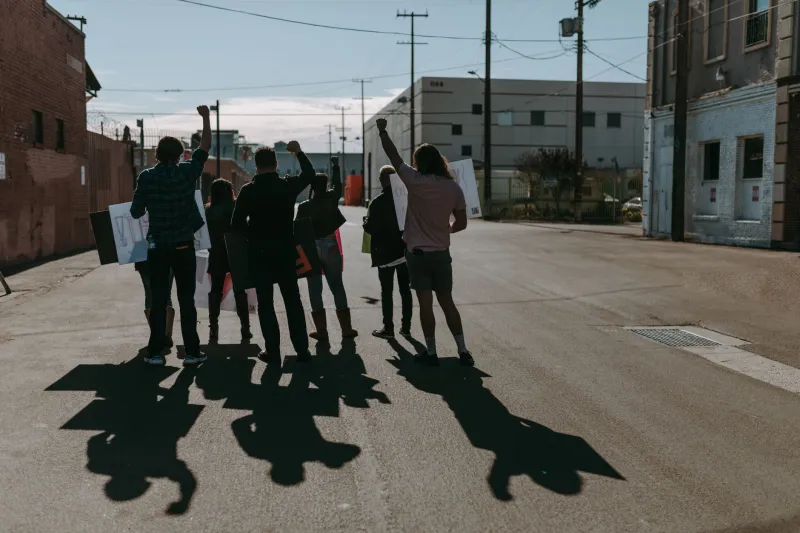
Some people in the anonymity dressing world are explicit about this motivation. Danielle, a 32-year-old activist and organizer in Philadelphia, describes her wardrobe as "adversarial." She avoids anything with a visible logo or distinctive silhouette when she's at protests or public meetings. "I'm not naive enough to think a grey hoodie makes me invisible to a drone," she says. "But I'm also not going to make it easier for anyone to identify me by wearing something distinctive. Every little bit of friction matters."
This is where anonymous dressing tips from lifestyle choice into something closer to a political stance. When the infrastructure around you is designed to identify, categorize, and monetize your appearance, choosing to be visually unremarkable is an act of non-compliance. Small, maybe. Symbolic, sure. But symbols matter. That's why brands spend billions on logos.
None of Us, Specifically
There's something philosophically interesting happening in the anonymous dressing movement that connects back to something bigger than personal style. The pressure to be visually legible — to present a coherent, branded, recognizable self — is fundamentally a demand that you be an individual product. Personal branding is just marketing applied to a human being.
When people opt out of that, they're not disappearing into nothing. They're choosing to exist outside the system of legibility. They're saying: I am not a product. I don't owe you a readable self. You don't get to profile me.
None of us, specifically, is the point.
Mara from Chicago puts it this way: "I'm still me. I still have opinions and taste and things I care about. I just stopped advertising them on my body for free. If you want to know who I am, you have to actually talk to me."
How to Disappear Without Vanishing
If this resonates with you, the practical application is simpler than you might think — and cheaper than most fashion advice you'll get.
Start by auditing what your current wardrobe is signaling. Not what you want it to say, but what it actually transmits to a stranger who sees you for thirty seconds. Brand affiliations. Subcultural memberships. Political signals. Economic status markers. All of it is data you're broadcasting.
Then decide what you actually want to give away. Maybe you're fine with some of it. Maybe none of it. But make it a choice rather than a default.
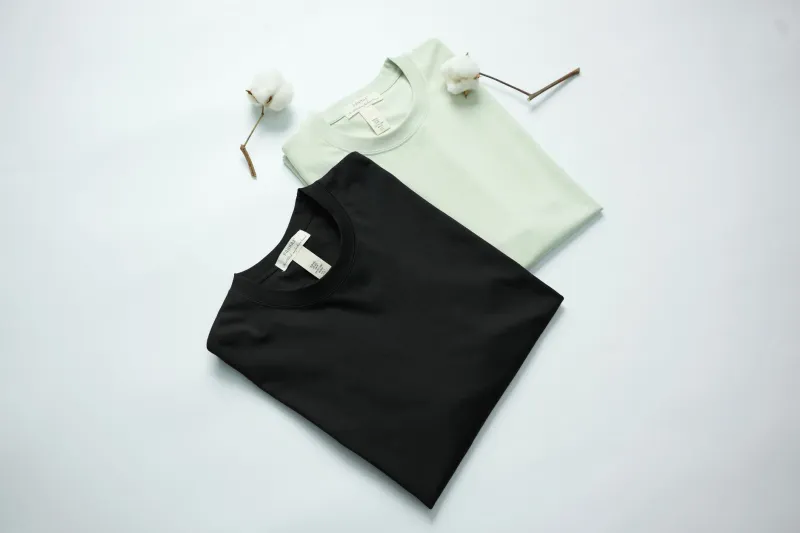
From there, build toward a wardrobe that's harder to read. Solids over graphics. Unbranded over logo-heavy. A tight color palette that doesn't anchor you to any particular aesthetic tribe. The goal isn't to look poor or sloppy — it's to look like a person rather than a character.
The irony, which everyone who goes down this road eventually notices, is that dressing to be unremarkable makes you more interesting to the people worth knowing. When you stop using clothes to perform an identity, you have to actually have one. That's the trade.
The Loudest Silence
In a culture that treats visibility as virtue and attention as currency, choosing to be visually forgettable is a genuine act of dissent. It doesn't photograph well. It doesn't go viral. It doesn't build a following or generate engagement. It just exists, quietly, outside the systems that are trying to capture and monetize everything you are.
That's not nothing. That might actually be everything.
Wear your resistance. Or don't wear it at all — and mean it.