You Are Not a Mood Board: The Freedom Hidden Inside a Self-Made Dress Code
Somewhere between the fifteenth "outfit inspo" reel and the third passive-aggressive email from HR about "maintaining a polished appearance," a lot of people quietly snapped. Not dramatically. Not publicly. They just stopped.
They stopped scrolling for ideas. Stopped buying things because a season changed. Stopped trying to look like a person who had their whole thing figured out. Instead, they sat down—sometimes literally with a notebook, sometimes just in their own heads—and designed a system. Their system. A personal dress code that answers to exactly no one.
This isn't minimalism as an aesthetic. It's not a capsule wardrobe you found on Pinterest. It's something more confrontational than that.
The Tyranny of Constant Curation
Let's be honest about what the current fashion landscape actually asks of people. It's not just "buy clothes." It's perform a coherent, evolving, visually interesting identity across every context of your life—work, weekends, going out, staying in, the gym, the farmers market, the airport, the Zoom call. And do it in a way that signals the right values, the right taste level, the right subculture allegiances, without looking like you're trying too hard.
That's an insane amount of cognitive labor. And most of it is unpaid.
Jordan, a 34-year-old graphic designer in Chicago, put it bluntly: "I realized I was spending more mental energy on what to wear than on actual creative work. And I'm someone who genuinely cares about design. That felt broken."
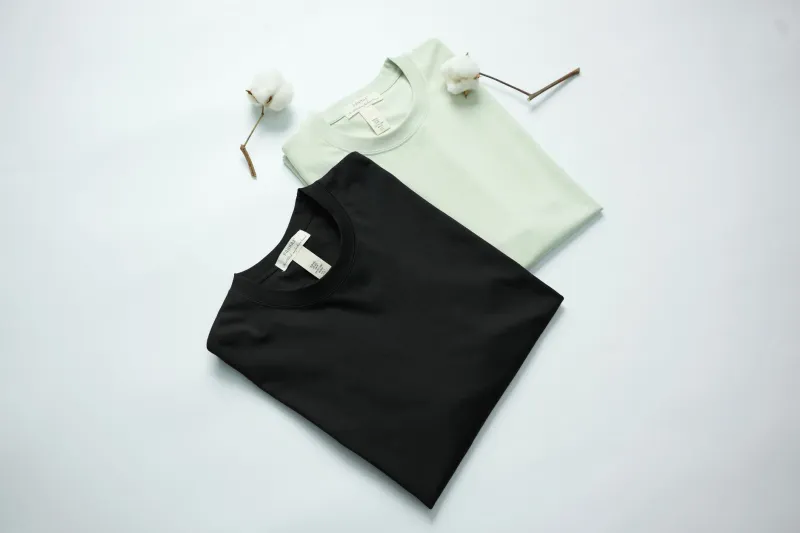
So Jordan built a uniform. Five identical black crewneck tees, three pairs of the same straight-leg dark jeans, two pairs of white sneakers, one pair of boots. That's basically it. "People at work thought I was going through something," they laughed. "I was. I was going through a personal liberation."
Rules as Resistance
There's a counterintuitive thing that happens when you impose restrictions on yourself before anyone else can. The rules stop feeling like a cage and start feeling like armor.
This is the psychology that personal uniform advocates talk about constantly, and it tracks. When you've already made the decision—this is what I wear—you've removed an entire category of daily negotiation. You're not performing flexibility. You're not signaling openness to trends. You've just opted out of the game entirely, and that opt-out is its own kind of statement.
Marcos, a 29-year-old nurse in Austin who moonlights as a zine maker, designed what he calls his "off-duty system" after years of feeling like his personal style was constantly being colonized by whatever was trending. "Every time I'd figure out something I liked, it would show up on fast fashion sites two months later and then I'd feel stupid for wearing it. I was chasing my own taste and losing."
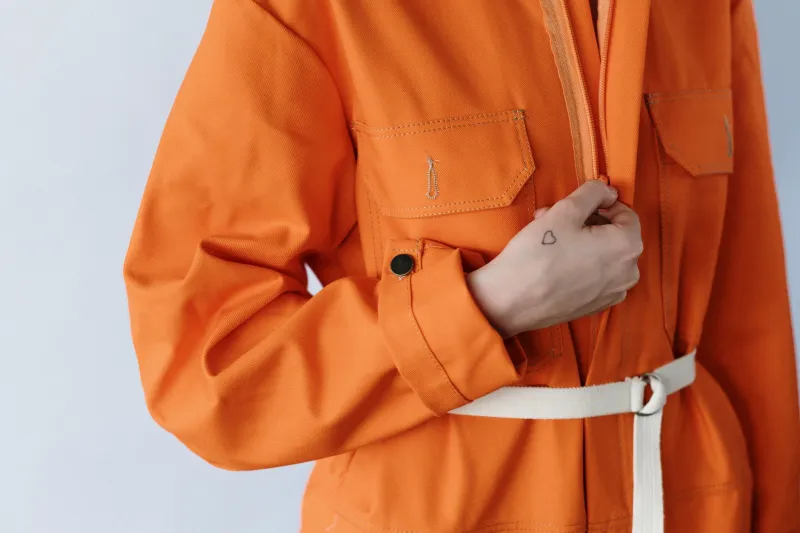
His solution: a rotation of vintage workwear pieces—Dickies, old Carhartts, some beat-up flannels—that he's been slowly collecting and repairing for three years. Nothing new. Nothing that exists in current trend cycles. "It's not a look. It's a position," he said.
What You're Actually Refusing
When you build your own dress code, you're refusing several things simultaneously, and it's worth naming them.
You're refusing the idea that your value shifts with the season. Fashion's entire economic engine depends on the premise that what you wore last year is slightly wrong now, which means you are slightly wrong now. A personal uniform system calls that bluff. Your clothes don't depreciate because you decided they don't.
You're refusing workplace dress codes their full psychological power. When you show up in your own deliberate aesthetic—whatever it is—you've already answered the question before HR can ask it. You're not trying to fit the mold. You're wearing your own. That's a different power dynamic.
You're refusing social media visibility metrics. This one's subtle but real. A personal uniform is, by design, unphotographable in any interesting way. There's nothing new to show. No haul to post, no "finally found my style" content to generate. You've exited the loop that turns your wardrobe into content.
How People Are Actually Building These Systems
The methods vary wildly, which is part of what makes this interesting. There's no one playbook.
Some people go the strict route—literally identical pieces, bought in multiples, replaced exactly when worn out. The Steve Jobs cosplay, except done with intention instead of tech bro mythology.
Others build around a restricted palette. Nadia, a 38-year-old teacher in Philadelphia, spent a month pulling out everything she actually wore and noticed a pattern: almost everything was black, rust, or olive. "I just leaned into it. I stopped buying anything outside those three colors. Now getting dressed is genuinely fast and I actually like everything I own."
Some people anchor their system around a single garment type. Only dresses. Only jeans and button-downs. Only workwear. The constraint creates coherence without requiring constant decision-making.
And some people—maybe the most radical—build their system around not looking like anything specific. Deliberately generic. Unremarkable. Invisible in the best possible way. "I don't want to be a walking signal," said one person who asked not to be named because, she said with a straight face, "the whole point is that I'm not trying to be findable."
The None of Us Point
Here's what all of these people share: they stopped outsourcing the decision of who they are to an industry that profits from their uncertainty.
That's the actual move. Not the specific clothes, not the color palette, not the minimalism or the workwear or the all-black everything. The move is deciding that your wardrobe answers to your life, not to a trend cycle, not to a workplace handbook, not to a social media algorithm optimizing for engagement.
A self-imposed dress code isn't conformity. It's the opposite. Conformity is wearing what the season tells you to wear, what your office tells you to wear, what your feed tells you to wear. Building your own system—even a rigid one—is an act of authorship. You wrote the rules. That means the rules work for you.
And honestly? There's something deeply satisfying about showing up in the same thing, day after day, completely unbothered. Not because you gave up on caring. Because you redirected that care somewhere that actually matters.
You are not a mood board. You don't have to be. You can just be a person, wearing your thing, on your terms.
That's enough. That's more than enough. That's everything.