Nothing On It: When Blank Clothing Became the Loudest Thing in the Room
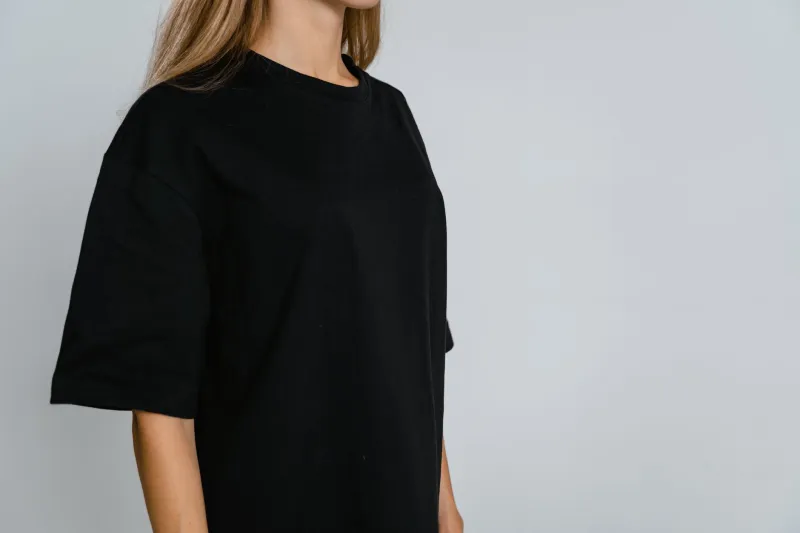
There's a guy at every art opening, every underground show, every too-cool-to-advertise sample sale. He's wearing a plain black crewneck. No logo. No graphic. No text. The cut is slightly off in a way that costs money to achieve. His pants fit like they were made for him — because they were, sort of, by a small-batch label out of a Portland warehouse that doesn't have an Instagram. You don't know the brand. That's the whole point. And somewhere in the back of your head, you know it.
Welcome to the era of deliberate invisibility, where the most aggressive status move is dressing like you have nothing to prove.
The Logo Is Dead. Long Live the Logo.
For decades, fashion operated on a simple transaction: you pay for the name, you wear the name, people see the name. The Polo pony. The interlocking Gs. The red sole. The status was legible. Anyone could read it from across a parking lot, and that was the point.
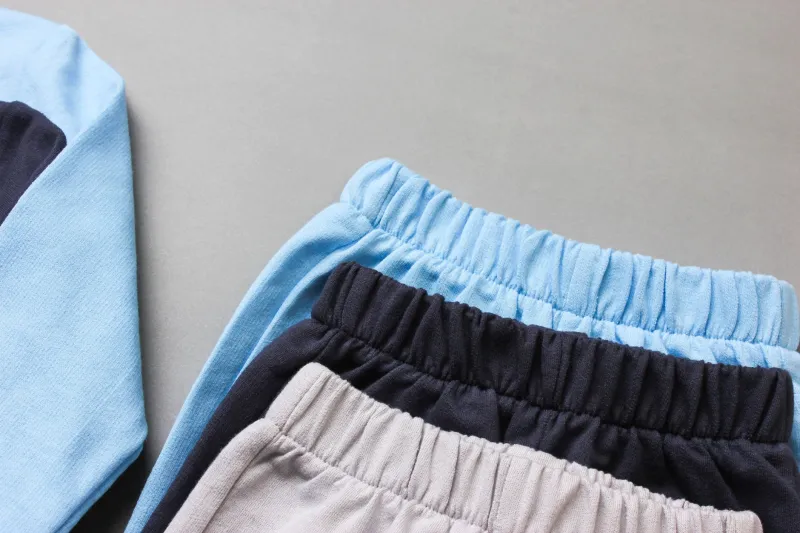
Then something shifted. It started at the margins — with workwear kids, with skaters, with the kind of people who'd been wearing Carhartt not because it was cool but because it held up. Then the luxury market noticed. Brands like Jil Sander, Lemaire, and a dozen smaller labels started building entire identities around restraint. The branding moved off the chest and onto the construction itself — the weight of the fabric, the precision of the seam, the way a collar lies flat without trying.
Now there's a whole ecosystem of what you might call ghost labels: small runs, minimal web presence, intentionally hard to find. Some sell direct. Some sell through one carefully chosen retailer. Some barely sell at all. And the people who know them treat that knowledge like a membership card.
Obscurity as Currency
Here's the paradox: the less visible a brand makes itself, the more visible it becomes to the people who matter — at least, to the people who've decided they matter.
This is how insider culture has always worked. It's the same logic as knowing the right record store, the right dive bar, the right corner of a thrift rack. Knowledge is the flex. The thing itself almost doesn't matter. What matters is that you found it, you understand it, and the person next to you at the party either gets it or they don't.
But blank-label fashion has a class problem that nobody in this world loves to talk about. A lot of these anonymous pieces cost more than the loudly branded ones. You're paying for fabric sourced from a single mill in Japan. You're paying for a run of 200 units. You're paying, essentially, for the privilege of wearing something that looks like nothing. That's not countercultural. That's just wealth with better taste in aesthetics.
And yet — and this is where it gets genuinely interesting — the same visual language has been claimed by people with completely different motivations.
Two Very Different People in the Same Shirt
On one end, you've got the tech-adjacent creative class, the people who read about "quiet luxury" in the Times and immediately started shopping for $400 linen trousers. For them, blank fashion is an upgrade. It's what you graduate to when you've outgrown the need to broadcast.
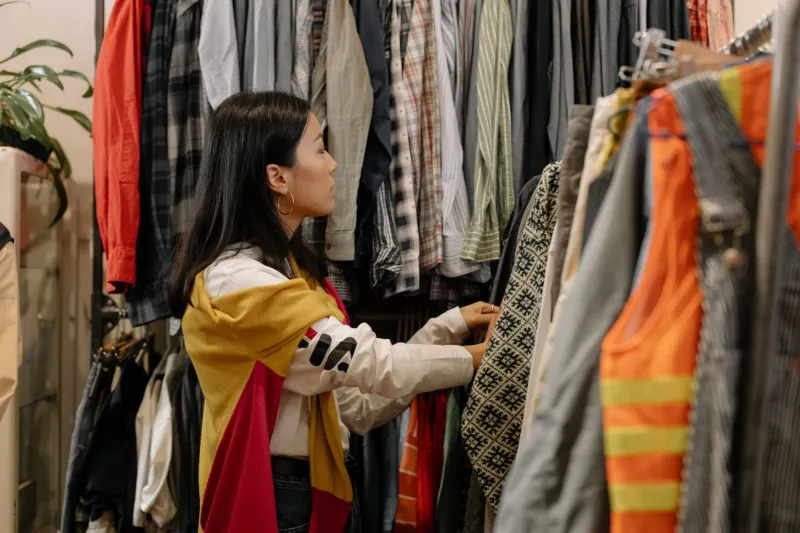
On the other end, you've got people who are deliberately stepping out of the brand economy altogether. Not because they can afford the fancy blank stuff, but because they're done participating in the whole system. Thrifted basics. Homemade pieces. Clothes that came from nowhere you can track. The invisibility here isn't about refinement — it's about refusal.
Both of these people might walk into a room wearing a plain white tee and dark pants with no visible branding. They look, from the outside, almost identical. But the politics underneath couldn't be more different.
One is opting out by spending more. The other is opting out by spending less — or not spending at all.
What the Blankness Is Actually Saying
Fashion has always been a language, and every choice you make — even the choice to make no choice — says something. When a brand decides to strip itself of all identifiers, it's communicating directly to a very specific audience: you already know what this is, and if you don't, it's not for you.
That exclusion is doing a lot of work. It's more aggressive than a logo, in a way. A logo says look at this. A blank label says figure it out. One is a billboard. The other is a locked door.
For the counterculture end of this equation, the blank aesthetic carries different meaning. It's camouflage. It's the refusal to be a walking advertisement for anyone's brand but your own. It's the understanding that the most radical thing you can do in a world that wants to monetize your visibility is to become, at least visually, unmonetizable.
None of that requires expensive fabric. It just requires intention.
The None Of Us Version of This
Here's what we actually believe: the blank isn't inherently radical. What matters is the reason behind it.
Wearing nothing on your chest because you've transcended branding is still a performance — just a more expensive one. Wearing nothing on your chest because you've made a deliberate choice to stop being a surface for someone else's message? That's something worth thinking about.
The most honest version of this whole conversation is that clothes mean what you make them mean. An anonymous label can be the ultimate status flex or the ultimate rejection of status, depending entirely on where you're standing and why. The garment doesn't know. You do.
So when you reach for the plain thing, the unbranded thing, the piece that says nothing out loud — ask yourself what it's actually saying. Because silence, in fashion like everywhere else, is never really silence. It's just a different kind of noise.
And some of us are very, very loud about saying nothing at all.