One Outfit, Every Day: The Quiet Revolt Hiding in Plain Sight
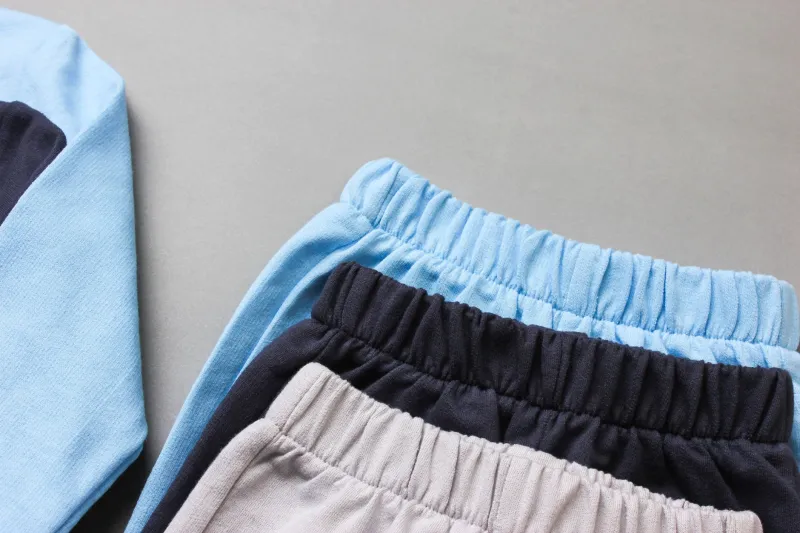
Somewhere between your algorithmic "For You" feed and the fourteenth email this week telling you that dopamine dressing is back, something snapped for a lot of people. Not loudly. Not with a manifesto or a protest march. Just quietly, deliberately, with the same dark pants and the same worn-in crewneck, day after day after day.
The personal uniform is having a moment—except calling it a moment feels like missing the entire point.
What a Uniform Actually Is (And What It Isn't)
Let's clear something up first. Wearing a personal uniform doesn't mean you own one shirt. It doesn't mean you've surrendered to beige or decided aesthetics are for suckers. It means you've made a decision—a real, considered one—about what you're going to wear, and then you stopped making it again every morning.
For some people that looks like five identical black turtlenecks and three pairs of straight-leg jeans. For others it's a rotation of graphic tees from bands they actually saw live, the same canvas jacket, the same boots until the soles give out. The throughline isn't sameness. It's intentionality.
That distinction matters because the fashion industry would love to sell you a capsule wardrobe as the uniform solution. Forty-seven "essential" pieces, all neutrals, all overpriced, delivered in branded tissue paper. That's not a uniform. That's just a smaller shopping cart.
The Algorithm Needs You Unsettled
Here's the thing nobody in the business of selling you clothes wants to say out loud: the entire engine of fast fashion and trend forecasting runs on your uncertainty. If you knew exactly what you wanted to wear and you already owned it, you'd be useless to them.
Retail algorithms—the ones deciding what shows up in your Instagram feed, your TikTok For You page, your targeted ads—are optimized to keep you in a state of low-grade dissatisfaction. You're not supposed to feel finished. You're supposed to feel almost there, perpetually one purchase away from some vague version of yourself that keeps moving.
Choosing a uniform is an act of opting out of that loop entirely. You're not playing the game anymore. And that's not a small thing.
Marcus, a 34-year-old teacher in Chicago, has worn some version of the same outfit—dark chinos, a plain white or gray tee, a single navy hoodie—for going on three years. "I didn't do it for any big political reason at first," he says. "I was just exhausted by the morning decision fatigue. But then I noticed I stopped doom-scrolling clothing sites at night. I stopped feeling bad about what other people were wearing. It kind of... cleared something out."
That clearing out is exactly what the attention economy can't afford.
Constraint as a Form of Freedom
There's a paradox buried in the uniform that takes a minute to feel. Limiting your choices sounds like the opposite of freedom. In a culture that sells liberation through options—more colors, more fits, more drops, more collabs—the idea that fewer choices could feel expansive sounds almost like a joke.
But talk to people who've done it and they'll tell you the same thing: once the decision is made, something opens up. Mental space. Time. A weird, quiet confidence that doesn't need external validation to hold its shape.
Jamila, a visual artist in Brooklyn, started wearing her uniform—high-waisted black trousers, a series of plain fitted tanks, one oversized linen blazer she rotates—after burning out on the performative aspect of getting dressed. "I used to spend so much energy thinking about what my outfit was saying about me," she says. "Now I don't think about it at all. I just think about my work. My actual work."
The uniform, for her, wasn't a retreat from self-expression. It was a rerouting of it.
Rebellion Doesn't Always Look Like a Statement Piece
There's a tendency in countercultural fashion spaces—and honestly, we're not immune to it here—to reward the loud gesture. The hand-painted jacket. The deconstructed silhouette. The slogan you can read from across the street. Those things matter. But they're not the only language resistance speaks.
Sometimes the most disruptive thing you can do is simply stop. Stop consuming. Stop refreshing. Stop performing novelty for an audience that's also performing novelty back at you, all of you generating data for platforms that profit from the exchange.
The personal uniform is resistance through subtraction. It doesn't announce itself. It doesn't need to. The people who notice it—really notice it—are usually the ones who've been thinking about the same thing.
Dev, who works in tech in the Bay Area and has worn the same rotation of three plain gray tees, dark jeans, and one pair of white sneakers for years, puts it bluntly: "People at work used to ask me if I was okay. Like wearing the same thing meant something was wrong. Now nobody mentions it. I think they've just accepted that I made a choice and I'm sticking to it. That's actually kind of radical in a place that's obsessed with signaling."
The Environmental Math Nobody Wants to Do
Beyond the psychological and political dimensions, there's a material one. The fashion industry accounts for roughly 10% of global carbon emissions. Americans throw away about 81 pounds of clothing per person per year. The average garment is worn seven times before it's discarded.
Seven times.
A personal uniform, almost by definition, breaks that math. You're wearing things until they're genuinely worn out. You're buying less, washing less, thinking about acquisition less. You're not immune to the system—nobody is—but you're putting significantly less fuel in its tank.
This is where the uniform stops being just a lifestyle choice and starts looking like a political one.
How to Actually Do It
No prescriptions here—that would defeat the purpose. But if you're curious about what a uniform might look like for you, a few places to start:
Pull everything out and look at what you actually reach for. Not what you bought with good intentions. What you actually wear, repeatedly, without thinking about it. That's your data.
Identify the friction. What are you avoiding when you reach past something? Too stiff, wrong fit, makes you feel like someone you're not? Get honest about it.
Let go of the aspirational stuff. The pieces you're keeping for a version of your life that hasn't happened yet are just noise. They're also usually the things making your closet feel overwhelming.
Buy one thing that does the job better, not five things that almost do. If you're committing to a uniform, quality starts to matter more than quantity. That's not an excuse to spend more. It's a reason to spend smarter and less often.
Don't perform it. The uniform isn't content. It's not a brand. The minute it becomes something you're showing off, you've just traded one kind of consumption theater for another.
The Loudest Thing You're Not Wearing
None of us is outside the system. That's built into the name. We're all somewhere in it, negotiating our relationship to what we own, what we buy, what we put on our bodies and what that communicates to the world and to ourselves.
But there's something to be said for the person who's decided the negotiation is over. Who's looked at the infinite scroll and the micro-trend cycle and the algorithmic nudges and said: I'm good. I know what I'm wearing.
That's not apathy. That's clarity. And in a culture engineered to keep you perpetually unsatisfied, clarity is its own kind of protest.