Dressed to Disappear: The Weird Overlap Between Tech Billionaires and Punks Who Hate Them

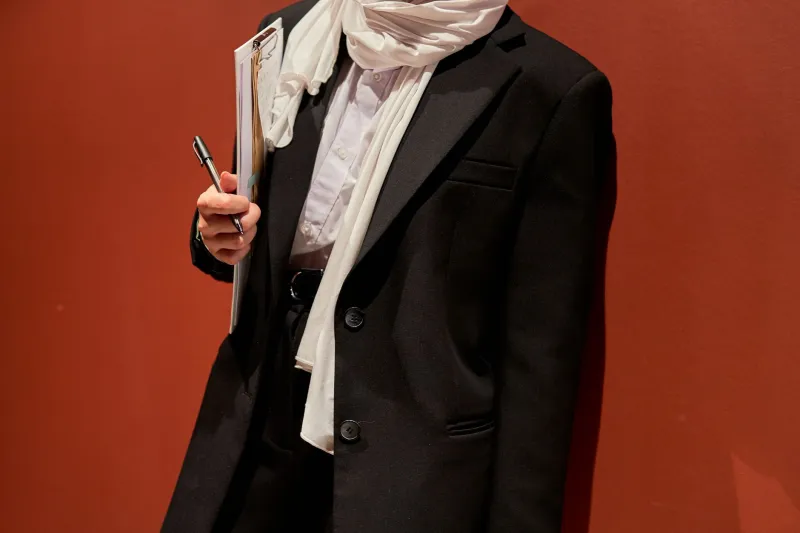
Photo: minimalist plain black outfit person standing urban street, via s3.amazonaws.com
Here's a thing that should bother you more than it does: the guy who once ran the most valuable company on earth and the kid squatting in a warehouse in Detroit making zines about dismantling capitalism might be wearing the exact same outfit. Black jeans. Plain tee. Maybe a hoodie. No logos. Nothing flashy. Just a body covered in the minimum required fabric to move through the world without getting arrested.
Same look. Completely different universe.
So what's actually going on when the aesthetic of refusal gets adopted by the people with the most to protect?
The 'Uniform of Genius' Is a PR Move in Clothing Form
Let's start with the billionaire version, because it's the one that got romanticized first. Steve Jobs and his black mock turtleneck. Mark Zuckerberg's gray t-shirts, delivered in bulk, hung in a row like a costume department for a man pretending to be a regular person. Obama-era profiles loved this bit — the idea that truly important, visionary people are so focused on changing the world that they've eliminated the cognitive load of choosing what to wear. The uniform as proof of genius. Friction reduction for the exceptional mind.
Except — and this is the part that always gets glossed over — that's a story these guys told about themselves. Zuckerberg literally announced his wardrobe philosophy in a public Q&A, which is the least casual way possible to seem casual. Jobs' turtleneck was designed by Issey Miyake. These aren't men who stopped thinking about clothes. These are men who thought very carefully about clothes and then performed not thinking about them.
The minimalist uniform, at that level of wealth and visibility, is a power move. It says: I am above the game. I don't compete on your terms. The rules of appearance that govern everyone else — the pressure to signal status, to perform effort, to show up correctly — those don't apply to me. I've transcended the whole thing.
That's not opting out. That's the most expensive possible way to look like you have.
Now Let's Talk About the Other Side of the Same Rack
Anti-establishment dressing has its own long tradition of stripping back to basics. The hardcore kid in a white tee and work boots. The radical who refuses to buy new anything. The activist who wears the same beat-up Carhartt jacket to every protest because they're not here to be looked at — they're here to do something. The punk who's allergic to branding precisely because branding is what corporations do.
This version of minimalism comes from a completely different place. It's not about transcending the game. It's about refusing to fund it. It's not 'I'm too important to care.' It's 'I know exactly how this works and I'm not playing.' The aesthetic might look similar from the outside — plain, unadorned, functional — but the internal logic is inverted.
One version of this outfit costs nothing and means everything. The other version costs nothing to someone for whom nothing costs anything, and means exactly as much as they want it to.
The Problem With 'Neutral'
Here's where it gets genuinely complicated, and where None Of Us has to be honest with itself too. There's a fantasy in countercultural dressing — and we've all bought into it at some point — that stripping away the markers of consumer culture somehow puts you outside of it. That wearing nothing is a neutral position.
It's not. Neutral doesn't exist.
When a billionaire wears nothing, he's wearing his net worth. The blankness is the statement. It says: I don't need clothes to tell you who I am. You already know. The power precedes the outfit.
When someone without money wears nothing, the reading is different and often harsher. The same plain tee that signals 'visionary simplicity' on a tech CEO can signal 'can't afford better' on someone who actually can't. The same refusal to perform can read as rebellion in one zip code and poverty in another. Context doesn't just inflect the meaning — it rewrites it completely.
This is the trap at the center of minimalist aesthetics in general: they tend to work best as a statement for people who have the option not to make one. Voluntary simplicity only reads as a choice when everyone can see that it's voluntary.
So What Does Resistance Actually Look Like?
This is the question None Of Us keeps coming back to, because it's not rhetorical. If the same outfit can mean power or protest depending on who's wearing it, then the clothes themselves aren't doing the work. Which means the work has to come from somewhere else.
The difference isn't the turtleneck. It's what you're building while you're wearing it. It's who you're accountable to. It's whether your 'opting out' costs you something or costs you nothing. It's whether your blank canvas is a starting point for something real or just a very clean surface for a personal brand.
Wearing less isn't inherently radical. Neither is wearing more. What matters — and this is the part that's genuinely uncomfortable to sit with — is whether the choices you're making about your appearance are connected to choices you're making about your life. Who you buy from. What you support. What you refuse. Whether the aesthetic of resistance is backed by any actual resistance.
Jobs and Zuckerberg figured out that looking like they didn't care was the most effective possible way to make you stop looking. The blank uniform became camouflage for everything they were actually doing.
The question is whether you're wearing something that makes people look, or something that makes them look away — and which one you actually want.
Because there's a version of 'none of us' that means solidarity. And there's a version that means everyone's on their own. The outfit's the same. Everything else is different.