Corporate Ghosts: Why the Dead Brands on Your Thrift Rack Are the Most Honest Thing in Your Closet
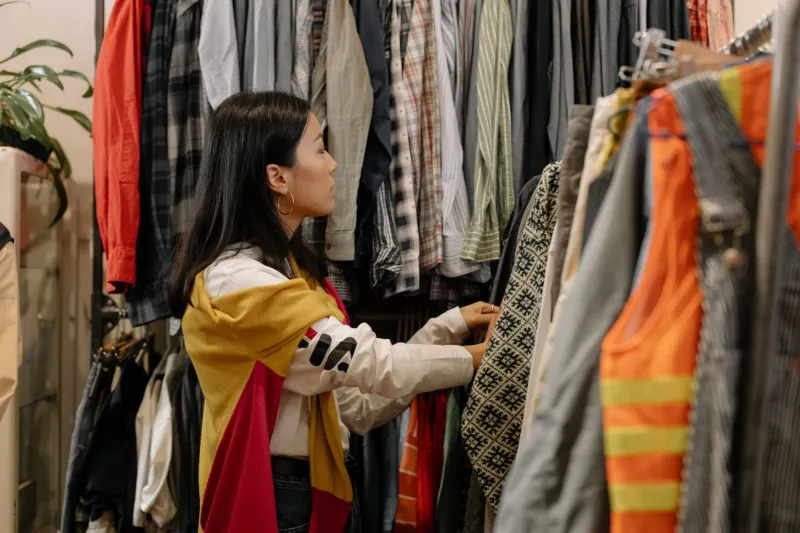
There's a specific kind of thrift store moment that doesn't get talked about enough. You're flipping through a rack somewhere between a sequined prom dress and three identical fleece pullovers, and you pull out a polo shirt or a windbreaker with a logo you almost recognize. Some regional grocery chain. A defunct airline. A savings and loan that collapsed under the weight of its own fraud in the late '80s. The brand is dead. The shirt is very much alive. And somehow, wearing it feels like getting away with something.
That feeling is worth examining. Because what you're holding isn't just vintage — it's evidence.
The Graveyard Is Bigger Than You Think
American capitalism has always been in the business of producing its own wreckage. Brands launch, extract, exploit, collapse, and disappear — and most of what they leave behind ends up in landfills, estate sales, or eventually, donation bins. The clothing that survives is like shrapnel from a blast nobody bothered to document. Circuit City polos. Montgomery Ward windbreakers. Enron softball jerseys. Borders bookstore tees. Each one represents a company that employed thousands of people, made enormous promises, and then evaporated — usually taking pension funds, livelihoods, or entire local economies with it.
What makes this interesting from a fashion standpoint is that these objects were never meant to be artifacts. A company-branded shirt exists to advertise loyalty and project corporate identity. When the company dies, that function collapses entirely. What's left is just fabric — fabric that happens to carry a historical record nobody asked it to carry.
That accidental archival quality is genuinely rare. Most fashion is designed to communicate something specific. Dead brand merch communicates something that was never intended: this thing failed. And in a culture that treats corporate success as a proxy for moral worth, that failure is quietly radical.
Wearing the Corpse of Something That Deserved to Die
Not all defunct brands are equal, and that's where it gets genuinely interesting. There's a difference between wearing a shirt from a regional department store that quietly went under and wearing the logo of a company that made the news for union-busting, wage theft, or straight-up financial fraud.
Take Enron. The company imploded in 2001 in one of the largest accounting scandals in US history, wiping out employee retirement accounts while executives cashed out. Enron-branded merch still surfaces occasionally — golf shirts, caps, the kind of corporate swag that used to get handed out at company picnics. Wearing that logo today is its own kind of commentary. Not because you're celebrating what Enron did, but because the logo now tells the full story: the hubris, the collapse, the people who got left holding nothing. The brand became its own indictment.
The same logic applies to companies like Sears, which spent years gutting its workforce and draining its pension obligations while hedge fund managers walked away rich. Or to any number of regional manufacturers that closed plants and shipped jobs overseas right after securing tax breaks from local governments. Their branded merchandise is still out there, still showing up in Goodwills and estate sales. When you wear it, you're not endorsing anything — you're carrying a ghost.
There's something almost confrontational about that, even when it's unintentional. You didn't design a protest shirt. You just found something at the bins for two dollars. But the object itself does political work that no amount of deliberate graphic design could fully replicate, because it's real. It happened.
The Unintentional Subversive
Fashion discourse loves the idea of intentional resistance — the carefully chosen slogan tee, the patch sewn in exactly the right spot, the deliberately deconstructed garment that signals you've thought hard about what you're wearing. And that stuff matters. But there's a whole other category of subversive dressing that flies completely under the radar: the accidental kind.
When you pull on a shirt from a failed company, you're not performing resistance. You're just dressed. And yet the object on your back is doing something that a lot of expensive 'statement' pieces never manage: it's telling the truth about power. Specifically, it's telling the truth that power is not permanent, that corporations are not immortal, and that the confident logomania of any given era looks pretty ridiculous from twenty years out.
This is part of what makes thrift store archaeology so compelling as a cultural practice. You're not just finding cheap clothes. You're reading a record of what got built, what got promised, and what got abandoned. The brands that survive long enough to become 'vintage' are mostly the ones that were big enough to produce massive quantities of merchandise. Which means the thrift rack is, in a very literal sense, a catalog of the largest players in the economy — and the ones represented most heavily are often the ones that left the biggest footprint of damage.
What to Actually Do With This
If you're already a thrift regular, you probably don't need to change much. Just start paying attention to what you're picking up. That faded polo from a defunct telecom company isn't just a neutral find — it's a conversation starter with a built-in history lesson. Know what you're wearing. Look up the brand if you don't recognize it. Find out what it was, who worked there, and what happened when it went under.
That context doesn't have to make the shirt unwearable. In most cases it makes it more interesting. You're not cosigning the company's legacy — you're wearing evidence that the legacy ended. There's a meaningful difference.
For the more intentionally minded, there's also something to be said for pairing dead brand pieces with visible context. A handwritten tag. A visible patch. Something that signals you know exactly what you're wearing and why. Not because the shirt needs explanation, but because starting that conversation is part of the point.
The Mortality of Power, Stitched in Polyester
Fashion's relationship with power usually runs one direction: brands accumulate cultural capital, consumers signal status by association, and the whole system reinforces the idea that certain names mean something durable and real. Dead brand thrift finds break that loop entirely. They're proof that the names were always temporary — that the confidence projected by any corporate logo is, at best, a loan against a future that isn't guaranteed.
None of us get to opt out of the economy entirely. We're all wearing something, all the time, and most of what's available to wear was made inside systems we'd rather not endorse. But there's a particular satisfaction in finding the remnants of a company that thought it was permanent and wearing them as evidence that it wasn't.
The graveyard is full. The racks are right there. Go digging.