Once It Leaves Your Hands: The Strange Afterlife of Clothes That Were Supposed to Mean Something
Photo: vintage protest shirts thrift store rack secondhand clothing political, via www.autoelektrik24.de
There's a particular kind of sick feeling that comes from seeing your old protest shirt on the wrong person. Maybe it's the guy at the bar who's wearing a Rage Against the Machine tee and voting straight-ticket corporate. Maybe it's the influencer who thrifted your donated ACT UP hoodie and captioned the fit pic with a fire emoji and zero context. Maybe it's worse—maybe it's in the window of a fast fashion chain, reissued as a "vintage-inspired graphic," stripped of every syllable of meaning it ever carried.
You made a choice when you put that thing on. The choice didn't survive contact with the world.
The Illusion of Authorship
When you buy a piece of clothing with a political edge—a slogan tee from an independent label, a hand-stenciled jacket, a shirt that directly references a movement or a moment—you're doing something that feels more like authorship than consumption. You're aligning yourself with an idea. You're making a declaration. The garment becomes a kind of portable argument.
The problem is that arguments require audiences, and audiences are not controlled variables.
Mia Okafor, who designs under the label Void Work out of Philadelphia, puts it plainly: "I design with a specific politics in mind. That's not a secret—it's literally on the shirt. But the second it leaves my hands, it enters a conversation I'm not part of anymore. Someone can wear it and mean the opposite of what I meant. That used to bother me a lot. Now I think it's just the nature of the thing."
This isn't a new problem. Punk learned it hard in the late '70s when its visual language got absorbed by the mainstream fashion industry almost before the scene had time to define itself. Hip-hop watched its aesthetics get extracted and sold back to suburban malls throughout the '90s. Every subculture that's ever built a visual identity has eventually had to watch that identity get untethered from its source and put to work for someone else.
What's different now is the speed. Recontextualization used to take years. Now it takes a TikTok cycle.
The Thrift Store as Meaning Graveyard
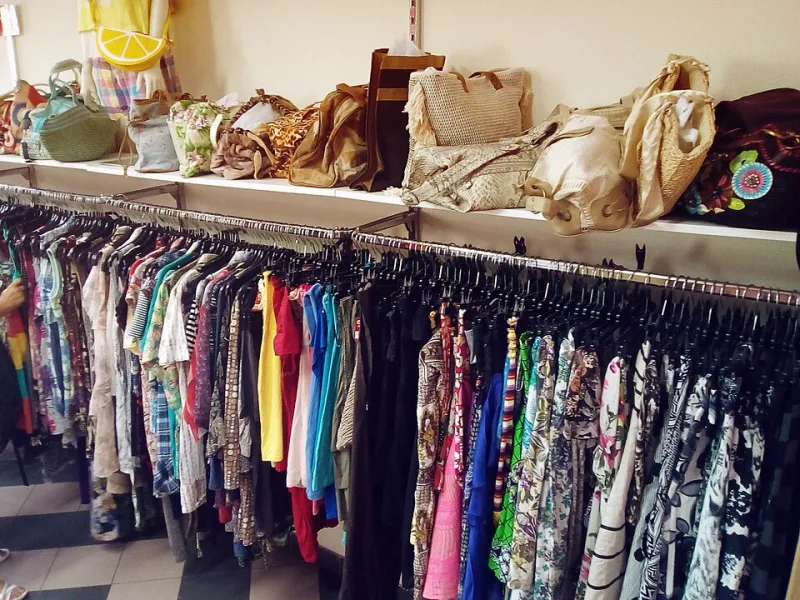
Walk through any Goodwill in America and you'll find the wreckage. AIDS Walks and union drives and anti-war campaigns and local punk shows, all folded and shelved and priced at $4.99. Some of it gets bought by people who know exactly what they're holding. A lot of it doesn't.
Jordan Reyes, a thrifter and vintage reseller based in Austin who runs a small Instagram archive of politically significant secondhand finds, describes the experience as "an ongoing archaeology of abandoned convictions."
"I found a shirt last year from a 2003 anti-Iraq War rally," he says. "One of the big ones in DC. Whoever owned it was there. They cared enough to be there and wear the shirt. Then at some point, it ended up in a bin in Texas. I bought it because I know what it is. But the person who almost bought it before me? She thought it was just a cool vintage graphic."
There's no villain in that story. The original owner presumably moved, or downsized, or just ran out of drawer space. The woman who almost bought it wasn't being disrespectful—she just didn't have the context. The shirt traveled from an act of political witness to a potential fashion purchase without anyone doing anything wrong. That's what makes it uncomfortable. There's no one to blame for the erasure.
Irony as Corrosion
If neutral recontextualization is uncomfortable, ironic adoption is something closer to violence. And it happens constantly.
The most visible version of this is the phenomenon of people wearing movement-adjacent clothing as a kind of distancing mechanism—wearing the shirt to signal awareness of a thing without any actual commitment to it. The ironic wearer gets the aesthetic credibility of radical politics without the inconvenience of holding radical politics. The garment becomes a prop in a performance of knowing detachment.
Designers who build intentional political content into their work are especially vulnerable to this, and many of them have complicated feelings about it.
"I've seen my stuff on people who I know for a fact do not share any of my values," says Tomás Guerrero, who designs politically explicit apparel through his Chicago-based label Contra. "And my first instinct is always anger. But then I have to ask myself—is the shirt doing something even when the person wearing it doesn't mean it? Is the message landing on people around them even if it's not landing on them? I don't have a clean answer."
That's a genuinely hard question. A shirt that says something real might still say it to the people who read it on someone who's wearing it as a joke. The message doesn't necessarily disappear just because the messenger is performing cynicism.
But it gets murkier. Because ironic adoption has a way of flattening meaning over time. When something gets worn as a joke often enough, the joke becomes the primary association. The original meaning doesn't just lose volume—it starts to invert.
The Reclamation Problem
So what do you do with this? If you're a designer, do you try to control where your work goes? Do you build in context—QR codes, liner notes, documentation that travels with the garment and insists on its history? Some designers are trying exactly that. Others think it misses the point.
"I can't police who buys my stuff," Okafor says. "And honestly, I don't want to. The whole idea of making something and releasing it into the world is that it becomes part of the world. If I'm trying to control every possible interpretation, I've basically made propaganda, not art."
For thrifters like Reyes, the act of buying with full knowledge is itself a form of reclamation. "When I buy something that has a real history, I'm not just buying a shirt. I'm taking on a responsibility to know what it is. That feels important to me. It doesn't fix the problem of all the stuff that gets bought without that awareness, but it's something."
The harder truth is that once something leaves your closet, you've ceded the rights. Not legally—but in every way that actually matters. You can donate it with a note. You can photograph it before it goes. You can tell its story online and hope that story catches up with the shirt someday. But you cannot make the next person care. You cannot force meaning to travel.
Wear It While It's Yours
Maybe the only honest response to all of this is to wear the thing like it matters while it's still in your possession. Not because the message will survive you—it probably won't, not intact—but because the wearing is itself the act. The shirt is not a monument. It's not a time capsule. It's a choice you make every morning when you get dressed.
None of us can control the afterlife of the objects we love. We can only decide what we mean by them while we still have the chance.
That's not a small thing. In a culture that moves this fast, choosing to mean something—even temporarily, even imperfectly—is a form of resistance all by itself.
Wear it while it's yours. Mean it while you can.