Cut, Dye, Disrupt: Inside the Underground Workshop Where Your Basics Become Yours
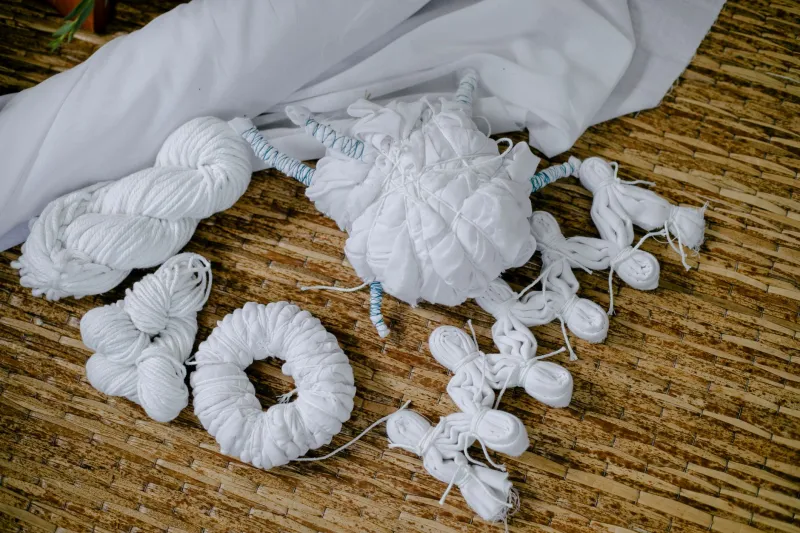
The tee costs $7.90 at H&M. It's white, boxy, 100% cotton. It was probably made in a factory that paid its workers less than a living wage, shipped across an ocean in a container, and placed on a rack between forty identical copies of itself. It is, in every meaningful sense, a blank.
In the right hands, it becomes something else entirely.
That's the premise of a thriving, largely unorganized, deeply intentional underground of makers who've decided that if they can't afford — or refuse to support — the brands that claim to stand for something, they'll make their own. Armed with seam rippers, fabric dye, embroidery hoops, bleach pens, and an unrelenting sense of purpose, these people are turning the cheapest clothing on the market into the most personal statements you'll see on the street.
The Canvas They Didn't Make
There's a certain genius to using a fast fashion basic as your raw material. You're not funding an independent brand with your purchase. You're not endorsing a logo or a campaign or a carefully crafted story about sustainability. You're buying the cheapest possible input for a creative act that the original manufacturer has absolutely no control over.
That's the part that matters. The moment you cut into that tee, you've severed the relationship between the object and the system that produced it. It doesn't belong to H&M anymore. It belongs to you — your hands, your intention, your message.
Renata, a 26-year-old in Atlanta who sells custom-altered pieces through a small Instagram account and local markets, calls it "reclamation work." She buys Uniqlo's plain crewnecks in bulk — "because the fabric is actually decent and the cut is forgiving" — and transforms them into embroidered political statements, cropped and bleach-splattered protest gear, and dense patchwork pieces that take upward of twelve hours to complete.
"I'm not buying into their brand," she says. "I'm using their material. There's a difference. They made the cloth. I made the thing."
Tools of the Trade
You don't need much to get started, and that's the point. This isn't craft for people with dedicated studios and expensive equipment. It's craft for people with a bathroom, a YouTube tutorial, and a reason.
Here's what the makers in this space actually use:
Bleach and discharge paste for stripping color and creating patterns on dark fabric. A plain black hoodie becomes a canvas for light the moment you introduce sodium hypochlorite in a controlled way. Spray bottles, stencils, and crumpled plastic wrap all produce different textures.
Embroidery thread and basic needles for text, imagery, and detail work. You can embroider anything onto a garment — a slogan, a face, a symbol, a date. It takes time, and that time is the point. Slow making is a rebuke to the speed of disposable fashion.
Seam rippers and scissors for deconstruction. Taking apart a garment and reassembling it differently — raw edges, asymmetrical hems, panels from two different pieces joined together — produces something genuinely new from something genuinely cheap.
Fabric paint and screen printing for graphics. A basic screen printing setup costs under $50 and lets you produce repeatable imagery on any fabric surface. Your design. Your run. No minimum order quantity.
Politics in the Stitching
This isn't just aesthetic play. For a lot of the people doing this work, the content of what they're making is as deliberate as the technique.
Dev, a 30-year-old in Los Angeles, started embroidering his clothing after the 2020 protests. He was frustrated by the wave of brands dropping "activist" merch — the performative BLM collections, the sudden profusion of raised-fist graphics from companies that had never said a political word in their lives. "I didn't want to buy their version of resistance," he says. "I wanted to make my own."
He now wears almost exclusively pieces he's altered himself. His current jacket has taken eight months of intermittent work — layered text from speeches, newspaper headlines, names. It's not for sale. It's not for a campaign. "It's just true," he says. "It's a record of what happened and what I think about it. You can't buy that at a pop-up."
This is the thing that distinguishes DIY alteration from the fashion industry's co-optation of DIY aesthetics. The distressed jeans at Urban Outfitters are designed to look like they mean something. The jeans that someone actually distressed over a weekend, while angry, while listening to music, while thinking about something — those do mean something. The difference is authorship.
What the Brands Can't Copy
Fashion has a long history of absorbing subculture and selling it back at markup. Punk got commodified. Streetwear got institutionalized. Cottagecore became a target demographic. The machine is very good at identifying something authentic and producing a scalable imitation.
But there are things it genuinely can't replicate at scale. Specificity. Personal history. The twelve hours of hand embroidery. The bleach pattern that came from holding the spray bottle at a particular angle while standing in a particular bathroom. The patch sourced from a show that no longer exists, sewn onto a jacket that belonged to someone's grandmother.
Mass production requires repeatability. The whole point of what these makers are doing is that it can't be repeated. Every piece is a one-off. Every one-off is a middle finger to the idea that your identity can be manufactured and shipped in a poly mailer.
Start With What You Have
If you've never altered a garment and you're reading this thinking you don't know where to begin, here's the honest answer: you don't need to know where to begin. You need a cheap tee, a pair of scissors, and a thing you want to say.
Cut it. See what happens. The worst case is you've ruined a $7 shirt. The best case is you've made something that's actually yours — something that no algorithm targeted you with, no brand manufactured for you, no trend cycle produced on your behalf.
That's the whole game, really. Not the technique. The ownership.
Make the thing. Make it yours. Wear it like you mean it.