Chest Full of Contradictions: What It Really Means to Wear Your Politics Before You've Earned Them

Let's start with the uncomfortable part.
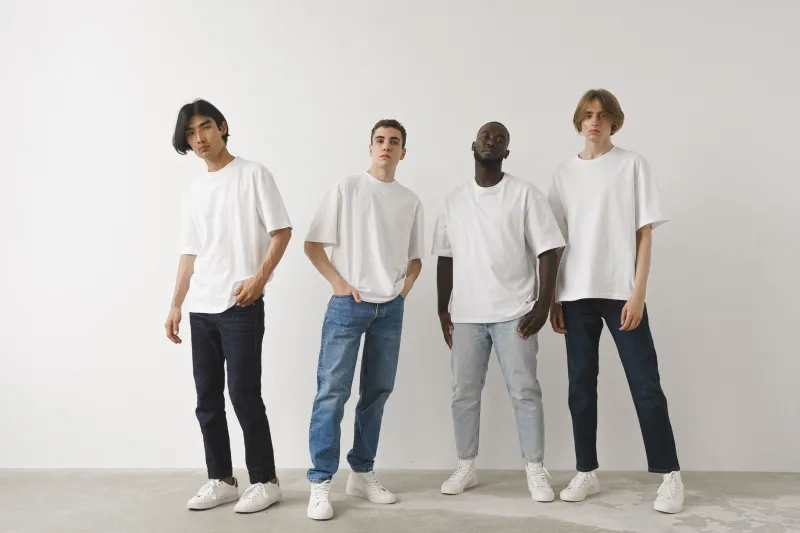
You're wearing a shirt that says something. Maybe it's a brand whose entire identity is built around labor rights, and you bought it on sale during a moment of moral clarity and haven't really thought about it since. Maybe it's a patch on your jacket for an organization you follow on Instagram but have never actually volunteered for. Maybe it's a slogan about a cause you care about — genuinely, deeply — but your actual daily choices haven't quite caught up to the conviction stitched across your chest.
Now someone's looking at you. And you feel it.
That feeling has a name, and it's worth sitting with instead of explaining away.
The Gap Is the Point, Actually
Here's the thing about ideological alignment: nobody arrives fully formed. Every person who lives their politics with integrity started somewhere messier, somewhere more aspirational than actual. The gap between what you wear and what you fully embody isn't evidence of hypocrisy — it might be evidence that you're in the middle of becoming something.
That's a different argument than "it's fine to perform activism with no follow-through." It's not fine, and the people who use the becoming-argument as permanent cover for doing nothing deserve the side-eye they get. But the binary — either you're perfect in your alignment or you're a fraud — isn't honest either.
Tamara, 26, a grad student in Philadelphia, spent a year wearing a tote bag from a well-known anti-fast-fashion brand while still occasionally buying from exactly the kind of retailers the brand critiques. "I knew it was a contradiction," she says. "But the bag was also this constant low-grade guilt trip I was carrying around on my shoulder. And the guilt actually did something. It made me think about it every time I reached for my phone to impulse-shop. It wasn't instant transformation but it wasn't nothing either."
Clothes as conscience isn't a new idea. What's new is the social media environment that makes every contradiction immediately legible and publicly prosecutable.
The Callout Economy and What It Does to Real Change
We have built an entire infrastructure for catching people in the gap between stated values and lived behavior. And some of that infrastructure is genuinely necessary — when brands claim progressive values while engaging in exploitative labor practices, they deserve to be called out loudly and specifically.
But the same energy gets applied to individuals who are, by most measures, just trying to figure it out. And when the social cost of imperfect alignment becomes high enough, something counterproductive happens: people stop making visible commitments at all. They stop wearing the shirt because they're not ready to defend their entire lifestyle in the comments. They stop signaling affiliation because they can't afford the scrutiny.
The result isn't more authentic activism. It's just quieter non-participation dressed up as caution.
Roberto, 33, a teacher in Denver, put it plainly: "I stopped wearing anything with a message for about two years because I was scared of being called a hypocrite. And then I realized — by doing that I'd just made myself completely invisible on every issue I actually care about. Who does that serve?"
Nobody, Roberto. It serves nobody.
Performative vs. Aspirational — The Line Actually Exists
This doesn't mean all sloganeering is created equal. There's a real difference between performative fashion activism and aspirational alignment, and it's worth being honest about which one you're doing.
Performative is buying the protest tee because it's trending and you want the social capital of being seen in it, with no intention of ever doing anything else. It's the brand that slaps a social justice message on a $180 hoodie made in conditions they've never audited. It's the aesthetic of resistance without any of the friction.
Aspirational is wearing something that represents where you're trying to go — and letting it pull you forward. It's buying from a worker-owned brand before you fully understand co-ops, and then getting curious. It's the patch for the cause you're still learning about, and the discomfort of wearing it pushing you to learn faster.
The tell is usually in what happens after the purchase. Does the shirt start a conversation you actually engage with? Does it change how you think about the next decision? Or does it just hang in your closet doing the work of conscience so you don't have to?
Wearing It Anyway
None of Us has always been about resistance as a practice, not a credential. The name itself is the point — none of us are clean, none of us are finished, none of us get to opt out of the contradiction of living inside a system we're trying to push back against while still needing to eat and pay rent.
The clothes you wear are one small lever in a very large machine. Wearing the shirt doesn't make you an activist. But it might remind you that you want to be one. It might start a conversation with someone who needed to have it. It might make visible something that was invisible before.
Wear it with honesty. Know what you're doing and what you're not doing yet. Let the gap between the two be uncomfortable enough to move you.
That's not hypocrisy. That's how people change.