Blend In, Drop Out: How the Personal Uniform Became the Punk Move Nobody Saw Coming
Somewhere between the fifth influencer capsule wardrobe drop and the third algorithm-curated "your unique style" Pinterest board, something snapped. Not loudly. Not with a manifesto. Just quietly, decisively — like someone finally turning off a television that had been on too long.
A lot of people started wearing the same thing every day.
Not because they gave up. Not because they ran out of ideas. Because they figured out that the loudest possible response to a culture screaming at you to express yourself constantly is to simply... not.
The Pressure to Be Interesting Is Exhausting
Here's what nobody tells you about the era of personal branding: the demand for constant self-expression is its own kind of conformity. Every morning you're supposed to perform your identity for an invisible audience. Your outfit has to say something. Your aesthetic has to be coherent. Your "vibe" has to be discoverable, searchable, saveable.
That's not freedom. That's a second job with worse benefits.
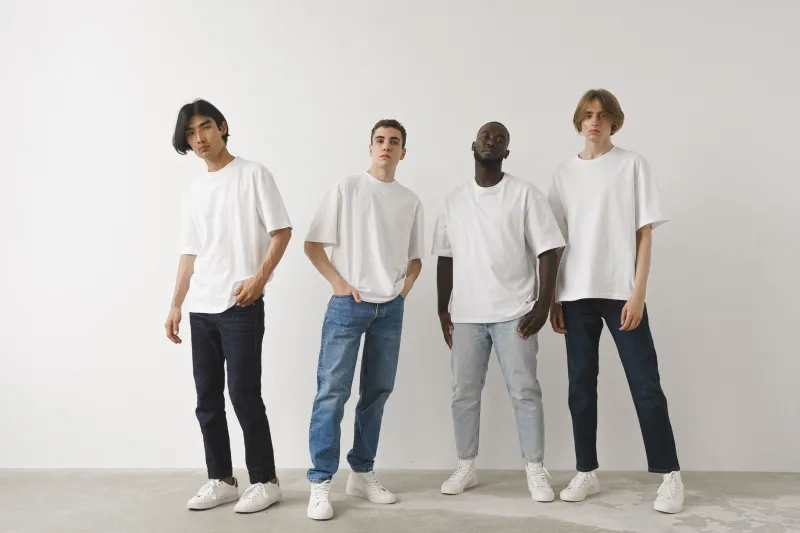
Marcus, a 34-year-old logistics coordinator in Columbus, Ohio, figured this out about three years ago. He owns seven identical navy blue crewneck sweaters, four pairs of the same straight-leg dark jeans, and two pairs of the same white sneakers. He rotates them like clockwork. His coworkers used to tease him about it. Now they mostly just seem unsettled, which he finds deeply satisfying.
"People don't know how to read me," he says. "And that's the point. I'm not giving them anything to grab onto. No trend to clock, no brand to judge, no aesthetic to file me under. I'm just a person in a sweater."
That's more radical than it sounds.
When Sameness Becomes Signal
The counterculture has always been about refusing the terms handed to you. In the '70s that meant ripped denim and safety pins. In the '90s it meant thrift-store flannels and anti-logo everything. The logic was the same even when the look was different: refuse the dominant aesthetic, make the refusal visible.
But the dominant aesthetic shifted. Now the dominant aesthetic is visible refusal. Weird is mainstream. Niche is a market segment. Your "anti-fashion" statement has a hashtag and a dedicated Reddit community and a brand partnership waiting to happen.
So what's actually left to refuse?
The uniform people have an answer: refuse the performance itself. Don't give the machine anything to metabolize. Dress so consistently, so deliberately, so unapologetically without variation that you fall completely outside the logic of trend and identity-consumption. You become, in the best possible way, unclassifiable.
Jordan, 28, works in tech in Austin and has been wearing variations of the same gray t-shirt and black straight-cut pants combination for two years. She's not minimalist-aesthetic about it — she's not trying to look sleek or curated. The shirts are different brands, different fits, slightly different shades. The whole thing is deliberately unremarkable.
"The tech world is obsessed with projecting a certain kind of effortlessness," she says. "Like, everyone's trying to look like they don't care, but they clearly care so much. The $400 plain white tee. The 'I just threw this on' fit that took forty-five minutes. I wanted to actually not care. So I just wear gray shirts. Every day. It breaks something in people's brains when they can't figure out if you're doing a thing or not."
The Corporate Aesthetic as Trojan Horse
There's a more specific version of this that goes even further: people deliberately adopting the most aggressively normal, corporate-coded looks they can find. Not ironic prep. Not elevated basics. Just... khakis. Polo shirts. The kind of clothes that read as aggressively unmemorable.
Devin, 31, a freelance writer in Chicago, started doing this after years of trying to dress in ways that communicated his politics, his taste, his tribe. "I was exhausted," he says. "Every piece of clothing was doing so much work. I wanted to just exist without my wardrobe making arguments for me."
So he went full middle-manager. Chinos. Button-downs from the clearance rack at Target. White New Balance 990s — not because they're cool again, but because they're functional and they've been available for decades and they'll be available for decades more.
"People who know me are baffled. People who don't know me have no idea what I am. Am I a suburban dad? A guy who doesn't care? A guy who cares so much he went full anti-care? They can't tell. And the fact that they can't tell means I've slipped the grid. I'm not a demographic. I'm not a customer profile. I'm just a dude in chinos."
That slippage — that refusal to be legible to the systems that want to read you, sort you, and sell to you — is exactly what the uniform rebellion is about.
None of Us, Specifically
What ties these people together isn't a look. It's a stance. It's the shared understanding that in a culture built on the commodification of individuality, the most genuinely individual thing you can do is opt out of the performance entirely.
None of them are trying to start a movement. None of them have a newsletter about it. That's kind of the whole point.
The uniform isn't a statement. It's the absence of one — and right now, that absence hits harder than almost anything else you could put on your body.
Wear the same thing tomorrow. See what it does to people.