Dead Stock, Living Culture: Why Thrift Is the Only Fashion Economy That Actually Works
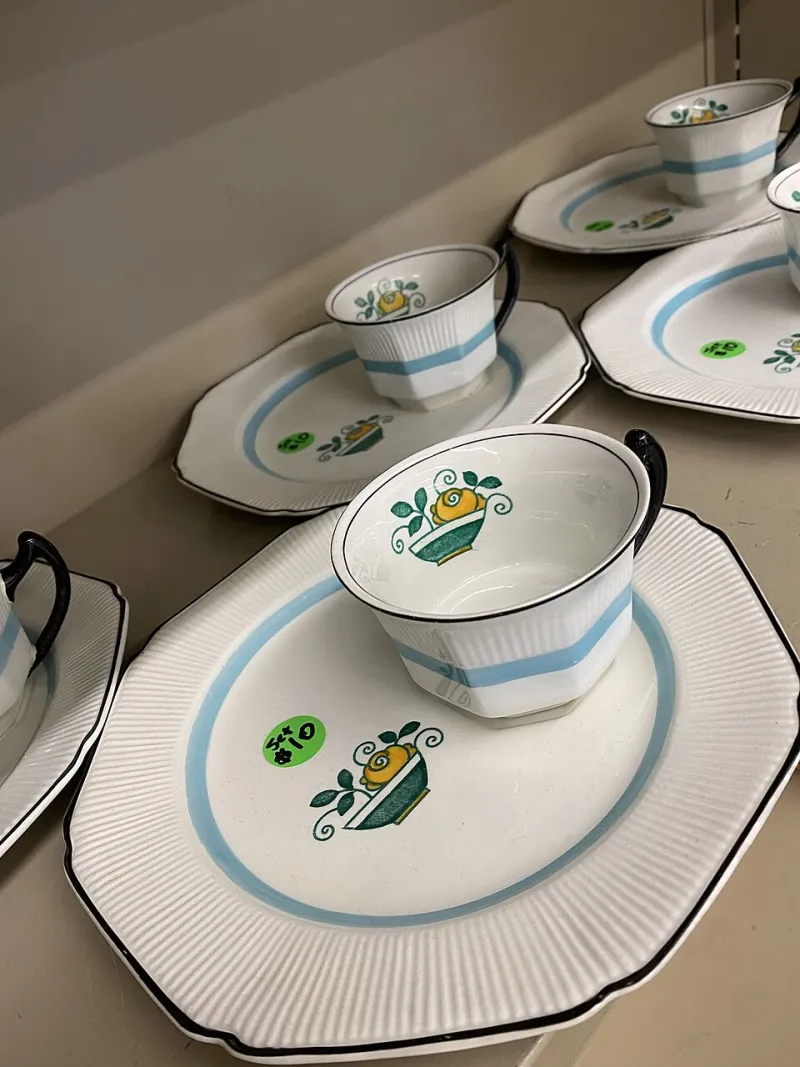
Photo: Anora McGaha (NCNorie), CC BY-SA 4.0, via Wikimedia Commons
Let's get something straight: the fashion industry as it's typically described—runways, drops, seasonal collections, influencer hauls—is mostly a PR operation. It exists to generate desire, manufacture scarcity, and move product. What actually drives how Americans dress, how subcultures form, how aesthetics evolve and mutate and come back around? That's happening in thrift stores, estate sales, resale apps, and the trunks of cars at weekend flea markets. The secondhand market isn't a supplement to fashion. It is fashion.
And the numbers back it up. The US resale market hit roughly $43 billion in 2023 and is projected to more than double by 2028, according to data from ThredUp's annual resale report. That's not a niche. That's an industry eating another industry alive.
The Drop Is Dead. Long Live the Find.
There's a specific kind of excitement that comes with a brand drop—the countdown timer, the limited stock, the screenshot of your cart before it sells out. But talk to anyone who's been seriously thrifting for more than a year and they'll describe something different: the adrenaline of not knowing what you're going to find. The way a Goodwill on the edge of a college town hits different than one in a wealthy suburb. The muscle memory of flipping through a rack at exactly the right speed.
That unpredictability is doing something that algorithmic retail fundamentally can't. It's creating genuine discovery. When you pull a 1987 concert tee out of a bin for three dollars, you're not consuming a product that was engineered for you to want. You're finding something that survived. That distinction matters more than it sounds.
Jordan Reyes, a 28-year-old reseller based in Chicago who runs a small vintage operation out of her apartment, puts it plainly: "Every piece I sell has a story that nobody manufactured. That's the whole point. I'm not selling an aesthetic—I'm selling something that actually happened."
Innovation Doesn't Come From the Top
Here's a thing fashion media doesn't love to admit: almost every major aesthetic shift in American style over the past fifty years originated in communities that were either ignored or actively excluded from mainstream fashion. Workwear as streetwear. Military surplus as anti-establishment flex. The way hip-hop redefined what luxury meant. The way punk made destruction into design. None of that came from a design house. It came from people making do, making statements, and making something new out of what was already there.
Thrift culture is where that process is still alive and unmediated. When a teenager in Detroit layers a vintage Western shirt over a band tee she found for two bucks, she's doing something more creatively interesting than whatever's getting covered in Vogue this month. She's not referencing a trend. She's building a language.
Designers who actually understand this are paying attention. Marcus Webb, an independent designer in Los Angeles whose small-batch label sources from estate sales and deadstock fabric suppliers, says secondhand isn't nostalgia for him—it's research. "I go thrifting to understand what actually lasted," he says. "What got made well enough to still exist thirty years later. That tells me more about quality than any trend forecast."
The Economics of Opting Out
There's also a class dimension here that doesn't get talked about honestly enough. Thrift and resale have always been how working-class and low-income Americans have accessed clothing—not as a lifestyle choice, but as a necessity. The recent wave of mainstream enthusiasm for secondhand shopping is complicated by that history. When thrift stores in gentrifying neighborhoods start pricing vintage flannels at twenty-five dollars because they know who's shopping now, that's a real problem.
But the broader shift toward secondhand still represents something meaningful. Every dollar spent on a used garment is a dollar not going to a fast fashion brand paying poverty wages in an overseas factory. Every piece kept in circulation is one less item in a landfill. The math isn't perfect—nothing in fashion is—but the direction is right.
And the resale economy is creating actual economic mobility in ways the traditional fashion industry doesn't. Thousands of small resellers across the country are building real income streams, often without startup capital beyond a car and a phone. That's not nothing. That's a different model of who gets to participate in fashion as a business.
What the Brands Are Getting Wrong About All of This
Predictably, the mainstream fashion industry has responded to the secondhand boom by trying to own it. Major retailers have launched resale programs. Luxury brands are authenticating their own vintage pieces and taking a cut. There's a version of this that's fine—more product in circulation is better than less—but there's also a version where the industry absorbs the energy of secondhand culture and sells it back to you with a markup and a brand story.
Watch for that. When a corporation tells you that buying their certified pre-owned product is an act of resistance, they're doing the thing they always do: taking the language of dissent and making it a sales pitch.
The actual secondhand economy—the one that matters, the one that's generative—lives in the spaces those corporations can't fully reach. The local swap meet. The Facebook group for your city's vintage community. The reseller who knows your size and texts you when something comes in. That's where the culture is. That's where it's always been.
Thrift as Practice, Not Aesthetic
Maybe the most important reframe is this: thrifting isn't a look. It's a practice. It's a way of engaging with clothing that prioritizes history over hype, durability over novelty, and your own judgment over whatever the algorithm decided you should want this week.
That practice is inherently countercultural right now, not because it's edgy, but because it runs directly counter to the core logic of the fashion industry, which needs you to believe that what you have isn't enough and what's coming next is what you really need.
Buying used says something different. It says: what already exists has value. It says: I don't need the new thing. It says: I trust my own eye more than your marketing department.
In a landscape designed to make you feel perpetually behind, that's a radical position to hold.
The secondhand market isn't the future of fashion. It's the present—and honestly, it's been the whole point all along. The rest of the industry is just now catching up to something that bin-diggers and resellers and vintage obsessives have known for years: the best stuff is already out there. You just have to go find it.